Rawbutohnight
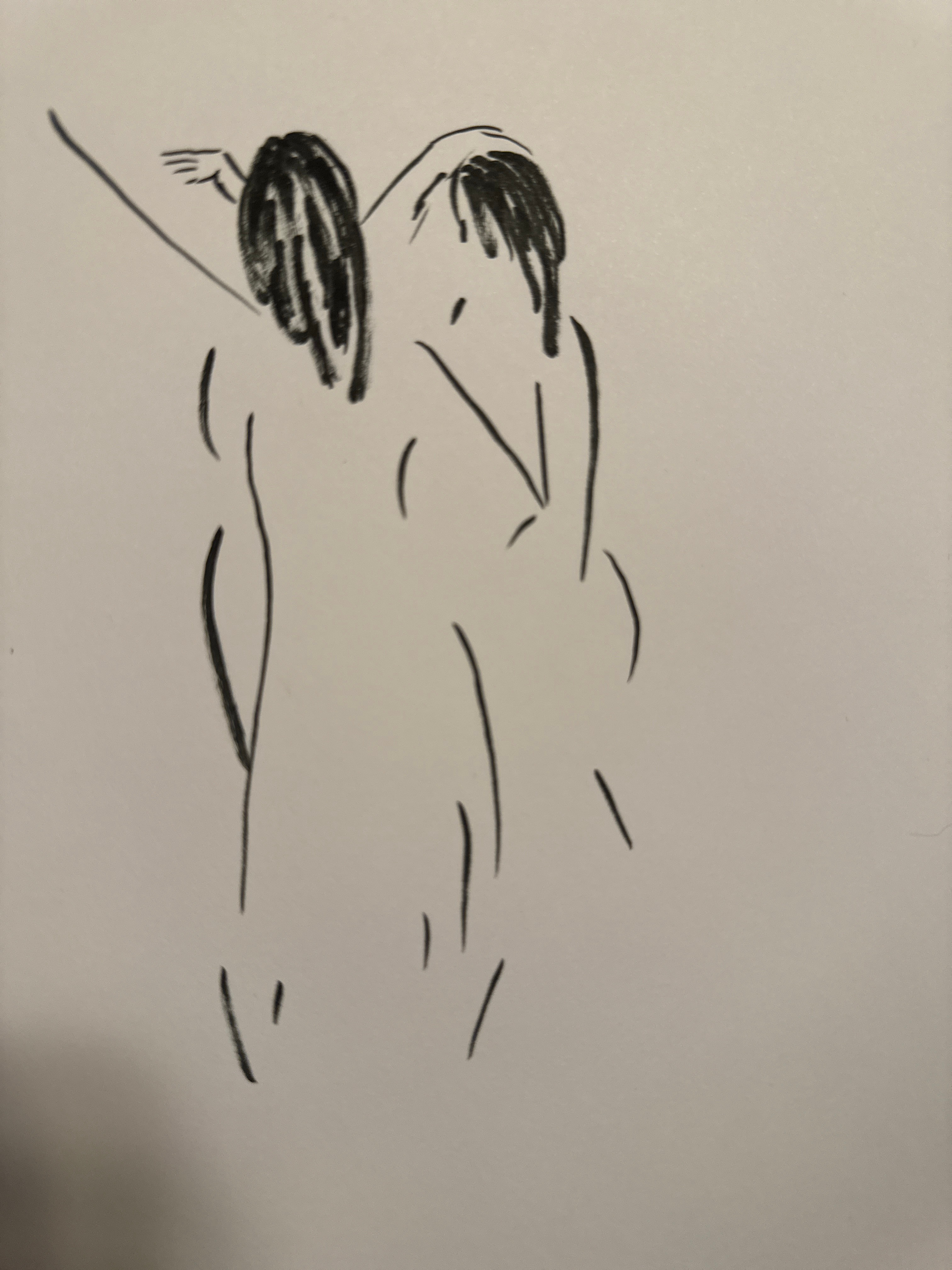
Reading the essay by Audre Lorde, “The Uses of the Erotic, ” triggered a flood of relieving thoughts. Caught in my actual state — exhausted by the expectations of others — I self-isolate to enjoy this satisfying moment: reading a book in bed while the sun shines on me through the dirty window. I am enough. I feel whole.
I remember how I broke my leg — under the heavy, toxic gaze of a person I didn’t “love back” in the way they wanted me to. I felt guilty for my genuine joy of dancing, dissolved in the music for a moment. I wasn’t able to carry their feelings, and my leg broke.
I am no longer dancing professionally, but going through my old paintings made me think about my butoh roots. That same evening I was sitting on the floor with my broken leg, trying to catch the dancers’ movements. The distance of a couple of years created a strange, valuable new perspective — diving into the performance while still recognizing all the technical dance details. “I could become a good butoh critic, ” I smiled internally.
No pressure, no obligation — old and new to the space, rooted and a stranger at the same time. The erotic in the air, without an explicit call to sex. Four girls united, touching each other — the next moment falling apart, each continuing with her own movement. Four stories in one space, fitting perfectly into my recent struggles with expectations: to join this or that, the willingness to love and unwillingness to swear unification until death — or the next partner.
We are always taught to follow the script — even in sex. In any relationship. In activism.
If the four no longer touch each other, do they really fall apart? Is it possible to have relationships built on trust — where everyone follows their own story, but together — leaving each other space, trusting that their paths will cross again? Is the space between them separation, or is it obvious that their dances are interconnected despite their different positions in the room?
As a former dancer, I obviously knew the answer: this kind of performance implies a very strong interconnection between dancers — watching each other, feeling each other, connected at all times.
As a viewer, years later, it was healing to be reminded that my point of view is valid.