On sacrifice and agency by Leo Efet
Sacrifice deserves remembrance, but it is not a political strategy.
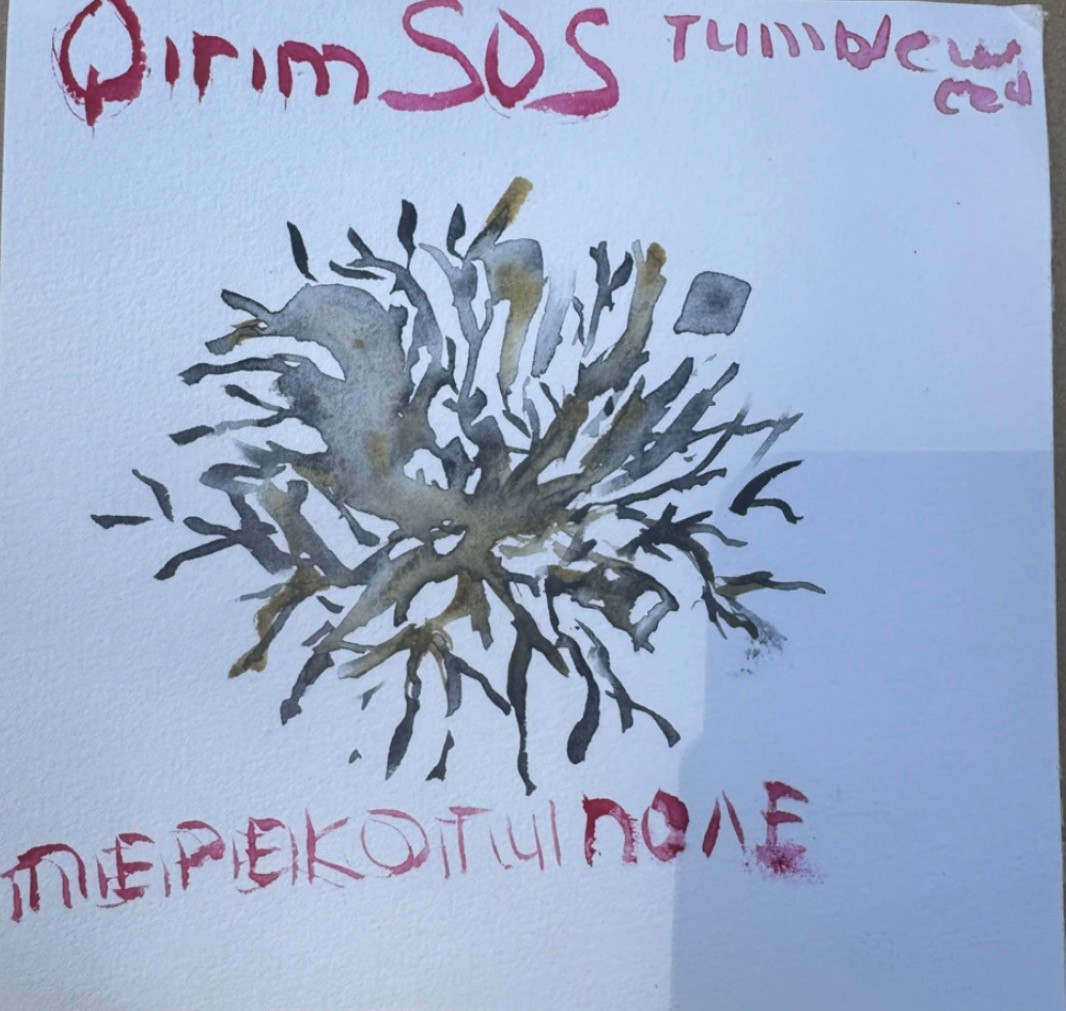
Crimea’s indigenous peoples usually appear in political conversations in two roles: as victims to be pitied and as symbols to be displayed. Deportation, occupation and repression have become memorials, but no one suggests a solution. By “no one” I mean visible public indigenous voices beyond the acknowledgment of suffering. Sacrifice becomes a tool controlled by someone else’s hands. The victim is not a participant: it is a very delicate, barely visible form of dehumanisation or infantilisation — “Look, acknowledge and help!”
A lot is written about the systems and obstacles behind this. But can we expect others to help us if the community has adopted the role so perfectly by itself? In the mode of seeking sympathy from different (sometimes wrong) sides, we decide nothing. Real participation starts not with the claim to be indigenous but with raising a real political voice: analysing, seeking solutions, offering an unfiltered opinion and taking part at the table where decisions are made. Not as an “indigenous speaker with a speech full of pathos”, but as specialists, analysts, researchers. We can say it loud about the Black Sea ecocide and the problems with water supply on the peninsula. It has been known for years, and it is getting worse. It will get worse still. It is nice to discuss the medieval knowledge of çeşme water systems in Crimea, but the truth is that this alone won’t help in the current military situation. Another truth is that we need competent indigenous decision-makers of all kinds, for participation in projects capable of influencing the Black Sea damage, from EU politics to Greenpeace and biological projects.
Sacrifice deserves remembrance and respect. But political strength comes from something else: from expertise, from one’s own narrative, from the readiness to formulate clear strategies rather than only to mourn.
Read also: Редкий пациент — диагноз без анамнеза (in Russian) — on a Berlin panel about the future of Crimea’s indigenous peoples and why they must be part of decisions about themselves.
Read also: Месть караимов / The revenge of the Karaites — a bilingual speculative fragment about the Crimean Bridge, salt and Karaites.
Leo Efet works across poetry, performance, visual arts and research. Qırımqaraylar (Crimean Karaim, indigenous of Crimea).
Лео Эфет работает на стыке поэзии, перформанса, визуального искусства и исследований. Qırımqaraylar (крымские караимы, коренной народ Крыма).