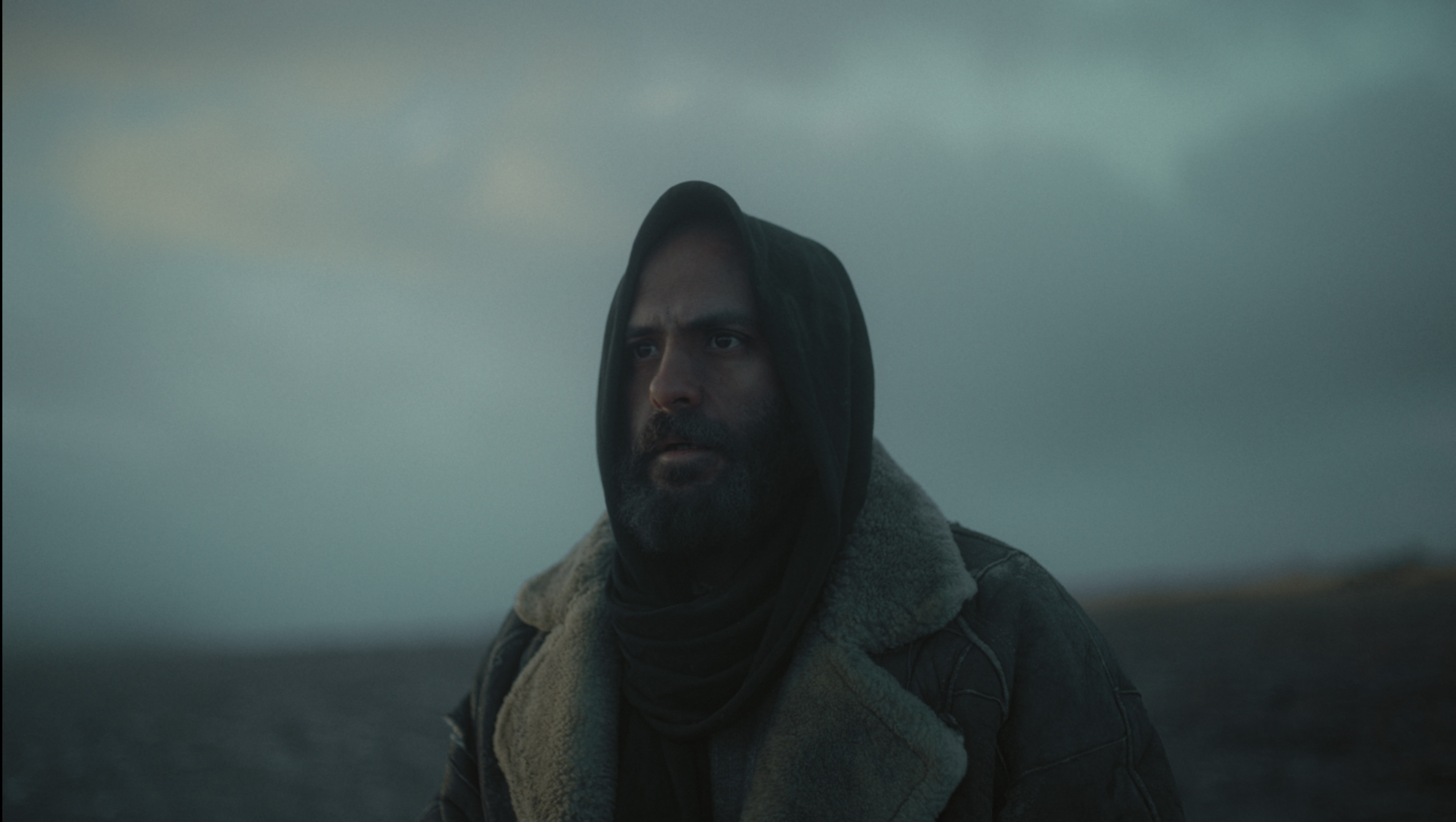
*I am Eja*
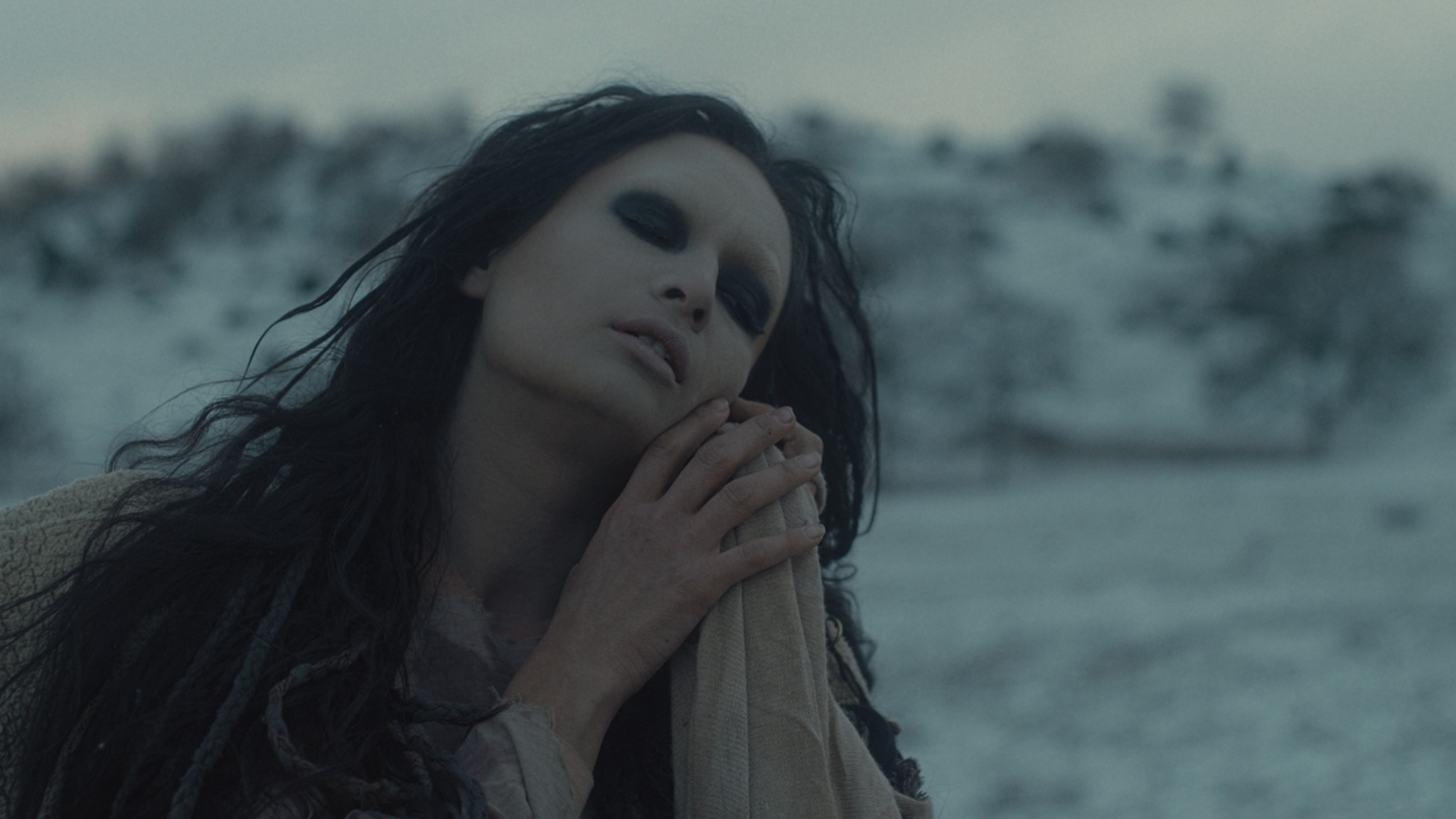
https://youtu.be/mYWr4wz9w28?si=A_4GYnOUvZBR6iGR
The Crimean art scene became the new movie- one of the rare movies in the Crimean Tatar language and truly the “first apocalyptic” philosophic movie-one could say if the term “ the first Crimean” won’t be exploited too often ……
The dreamy calming lonely landscape, the universal questions we all are trying to address- and multiple layers full of symbolism packed in 30 minutes. I am writing from the Qırımqaray- Crimean Karaim (one of indigenous ethnicities of Crimea) perspective though- at the one hand we all are even more the last Arif- who knows better than I the feeling being the last of mohicanner, being not able to arrive somewhere, being caught between panturcism and panjudaism and frequently erasured from everywhere? Trying to address the question what does indigeneity means today? How to survive if the community is small in numbers, dispersed and scattered through the world and even those who left, cannot communicate with each other due to different believes?
Back to the movie- beautiful modern aesthetics — no fes*, no qaytarma**, nothing what would visually address the Crimean indigenous symbolism we are used to. Still the outreach was loud- “that’s us, that’s our situation, that’s our apocalypse “among Crimean communities. One could fill the pages with the detailed description and analysis of visuals- but it never was my style, and I will let this field to others. I will jump straight into the symbolism.
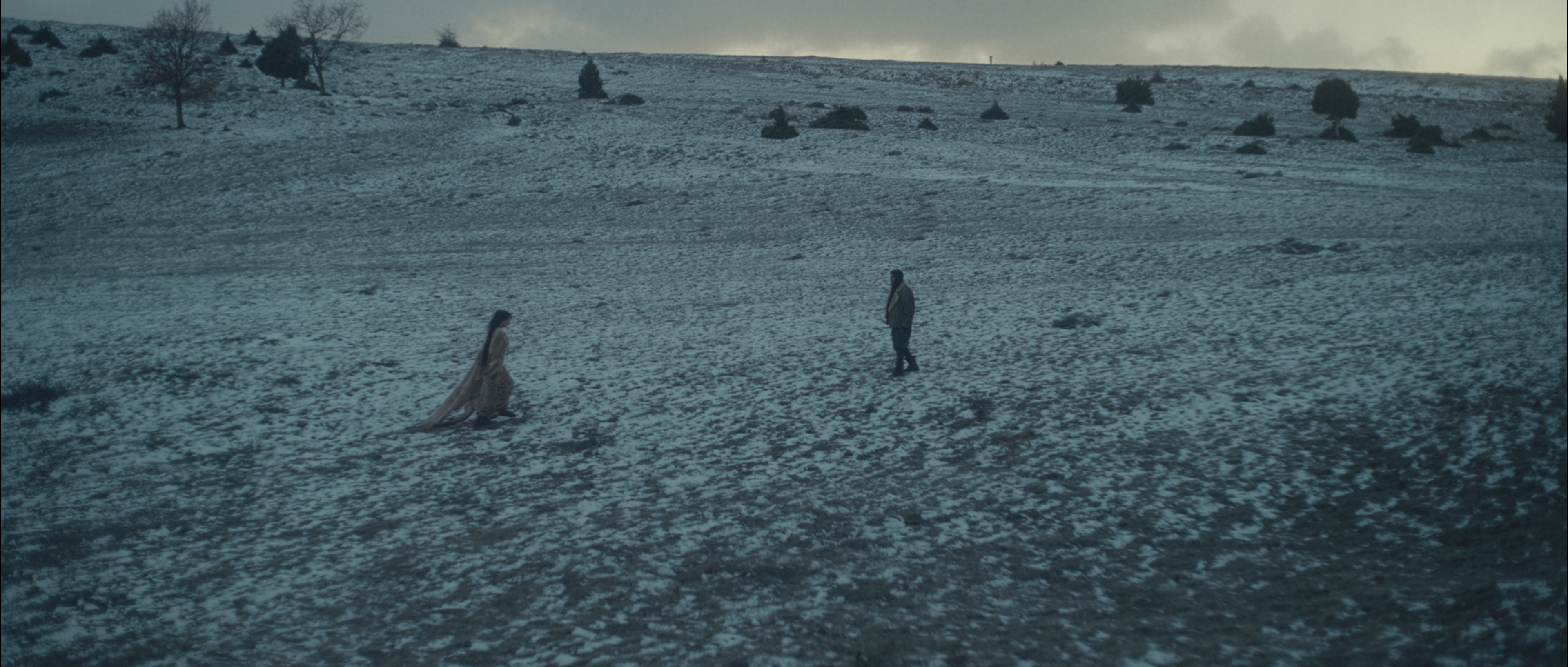
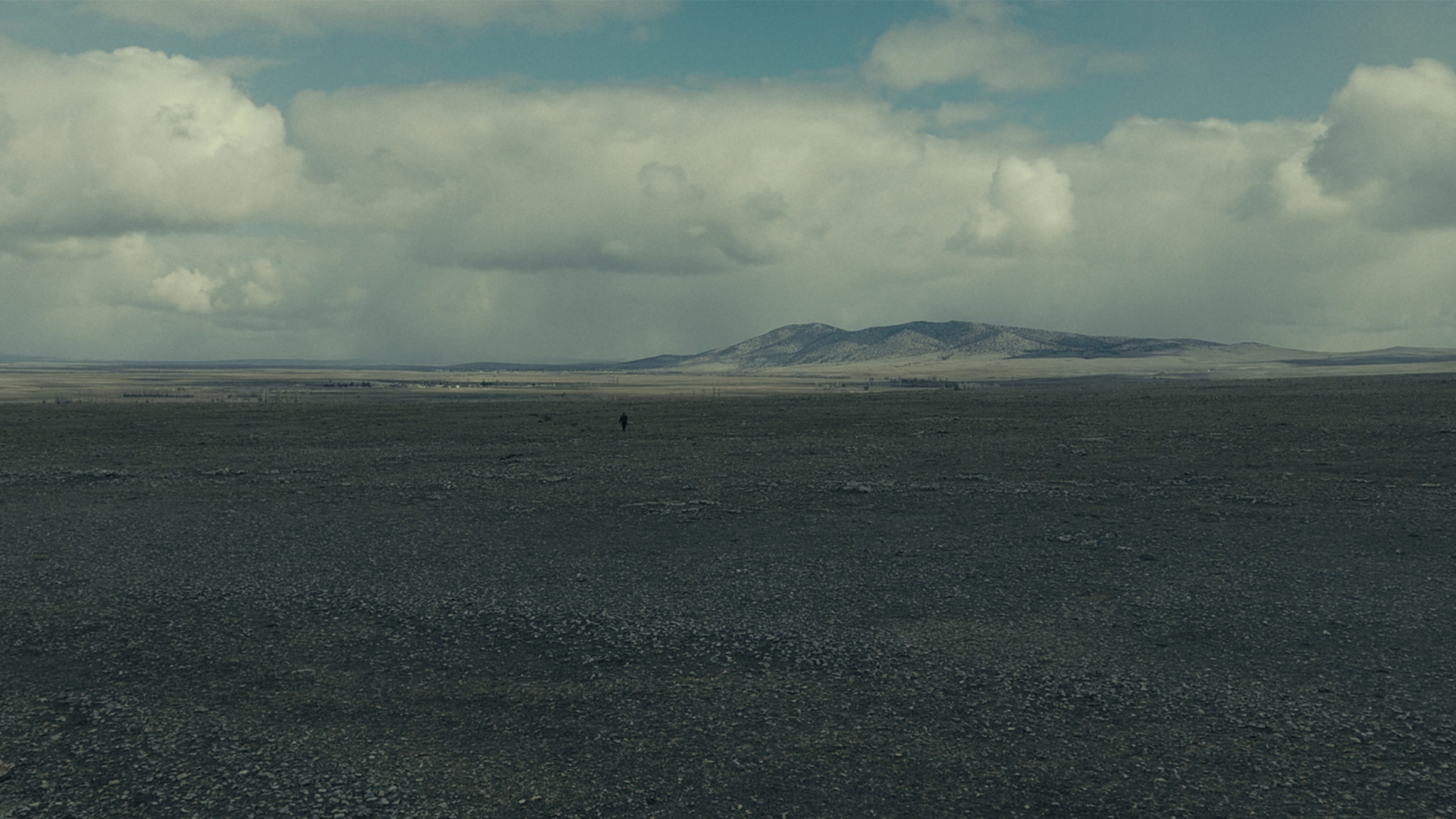
We see the man, alone, in the — as understood by many -apocalyptic world. Well going into mountains and seeking solitude is one of the oldest spiritual practices on earth, common in nearly all religions. We don’t know what happened and why is he there. He doesn’t know it either. The man has many questions and no answers. The solitude and loneliness are same but different- it’s always the individual point of view how we fill the space with sense. His loneliness is short though- through the miracle or rather as perceived his awakening and request- a woman comes. She doesn’t appear like magic- we see clearly a conscious decision to get out of her mountain and step by step going towards Arif. She is active — he is passive — a beautiful oxymoron to ancient categorization of male and female energy.
..........................................................................
*Fes is an essential headwear for women’s Crimean indigenous costume. This is a hat made of velvet or satin, which could be different in shape — cylindrical, in the form of a truncated cone, and with a variety of decor — embroidered with gold thread, decorated with coins, galloon, filigreed finials
** Qaytarma (lit. 'Returning'; also written as Haytarma ) is a form of Crimean folk dance and music characterised by cyclical motion. It is most performed at weddings and on holidays.
..........................................................................
Very quickly we witness that both have different talents- continuing the theory of gendered energy. He owns the logic and civilization- the spoken word and the fire (the ability to cook the food). How far does it take him in his survival? The woman is less equipped with skills- seemingly wild. He feeds her as the allegory of modern gender roles- the man who provides the house, the income and everything else to his family. She replies with gratitude and gives him what he is asking for- she uses her ancient knowledge and guides him through the landscape, with mysticism and telepathy — the lover melts into the mother Arif doesn’t remember anymore.
I was catapulted with light speed out of something modern and progressive into Crimean magic. I recognized myself, my own story, my painful transformation process and self-identification. I recognized myself in both- I was Arif asking questions and deep in my body Eja was awakening and whispering me the guidance. My Eja was never asleep, but growing up in Europe, getting natural scientist education made me not believe her. She wasn’t silent, she was loud since my early childhood, visited me in my dreams and visions during the daylight. I listened to stones and trees like Arif does at the old castle — reminding me of Çufut qale*. I listened to the hidden stories of the past. Sometimes with just as a very simple melody, hard to hear in the crowded space. Another time with the power of the orchestra and the shadows of former generations in an ancient ruin far away from everything- with enough air and space for all sensations. The Eja s voice was always here and she tried hard- but it made me anxious. I had to cover myself with the heavy thick coat of depressions, stir and grey so she cannot touch me. At the night I avoided to sleep in the dark- I feared nightmares. I feared visitors. I felt their presence in the darkest room like blurred shadows. Often, I woke up because of pressure on my chest. “If I could cry loud, they would go away” thought I in the ever-same dream.
.............................................................................................................................................
*Çufut Qale, Karaim: Кала, קלעה, romanized: Kala) is a medieval-city-fortress in the Crimean Mountains that now lies in ruins. It is a national monument of Qırımqaraylar (Crimean karaim) culture and the historical center of the community, located just 3 km east of Bağçasaray, the former capital of the Crimean khanate.
..........................................................................................................................................
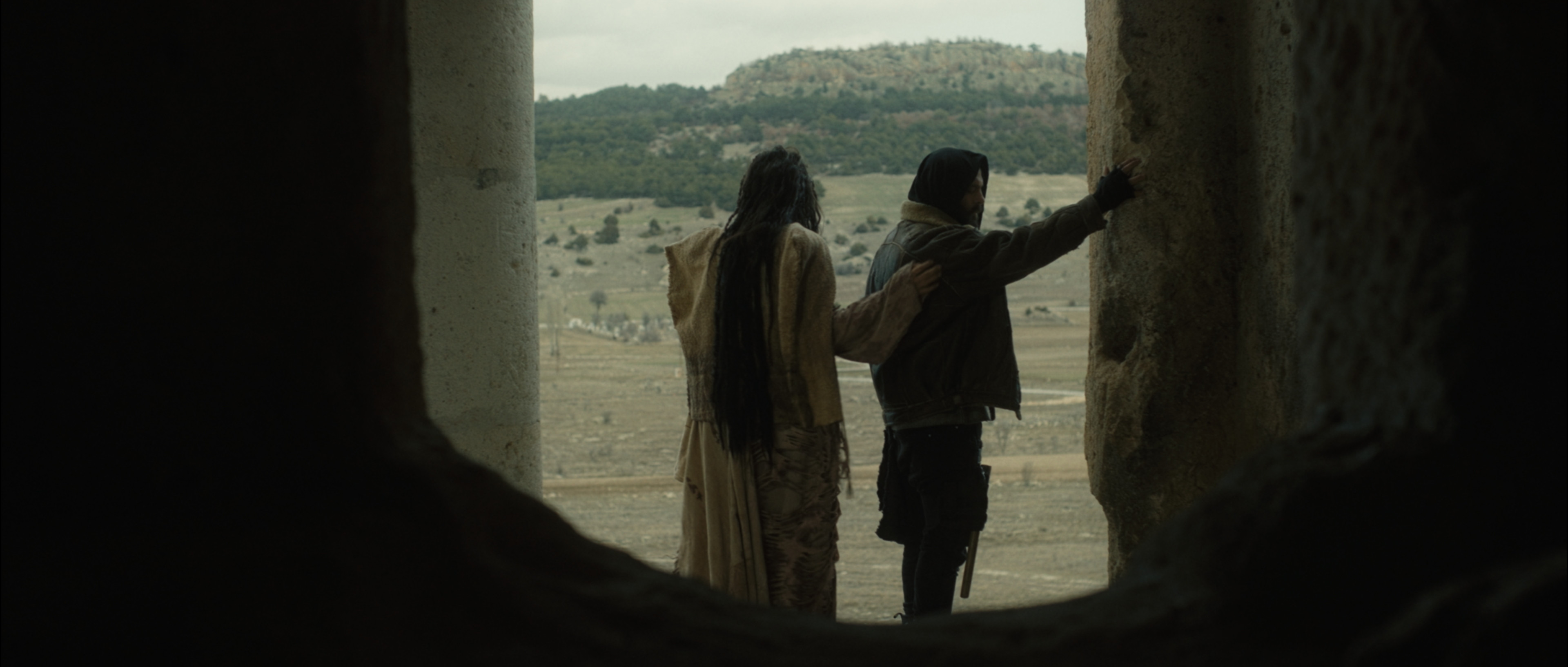
I met my Eja on the lonely place of my life. My ancestors I wasn’t thinking about reached and asked to pray for them. I didn’t know how to pray. “Just pray, you will find the right words”.
Blessed be you Adonai
Inside of me connection of all space and time
My ancestry spread through the galaxy
I can hear their words
When I am looking to the stars
We are making the law
My hair are the oak brunches
My feet grow through the earth
My scream connects upper and down world
And the sparkles of my neurons fire and activate the neurons of all
interconnected galaxies
As I finally looked into her face -the fear was gone and made the space for unbearable grieve. I felt everything at once- the tears of all generations prior me, the anger about my dumbness and love I didn’t know I was able to feel. She never gave me the clear answers likewise the Eja in the movie- but with the time I understood that her language was simply different. The human language is a tool, imperfect tool. Detailed descriptions still don’t give us the answers, because we humans are lacking the abilities to understand the universe. How can we describe something we don’t know? We describe, and describe and describe, without noticing that the truth escaped.
………………………………………………………………………………….
The pregnancy
Usually, all medieval fairytales end by this. the main goal is that the lovers unite. What happens after — is never told. What is the ideal of love in the perfect world? The pregnancy. The child of love- the allegory of hope and the survival. Future generations. The seed. That promise to become a flower. The tender moment is surprisingly destroyed immediately- Arif needs a son- the male descendant to secure his bloodline. The Eja is degraded to a vessel in his eyes- it’s her duty to lean her body to carry a son like him for the next 9 months. My dad was the only late child out of his parents and their 5 siblings. The war. The displacement. Sometimes I think that I ll never know if there were children before him. As I got pregnant with my first kid panics started to haunt me. Indifferent fears for miscarriage, the pressure to eat good, sleep well, make yoga -do everything for this vulnerable fruit inside of me. I heard his heartbeats in a cosmic enlightment and simultaneously carried the whole weight of the transgenerational responsibility. The fairytales never told us what came after.
The statistics did. I live in democratic Europe with high health and living standards. Nevertheless, postpartum depression is a thing. Young mothers overwhelmed with the pressure and the stress. Good young fathers help. Bad don’t. Fathers taking equal responsibility are rare species. Sometimes the love goes away. Single motherhood is one of the frequentist cases of poverty for children. It takes a village to raise a kid.
Recently a horrible case of grooming and murder of a teenage girl made it to the public. Who was the villain and outer enemy was clear very quickly. Later other details came out- single overwhelmed mother of 3, one child with disabilities. Father- distant. Lack of communication in traditional families- no sex or digital safety education.
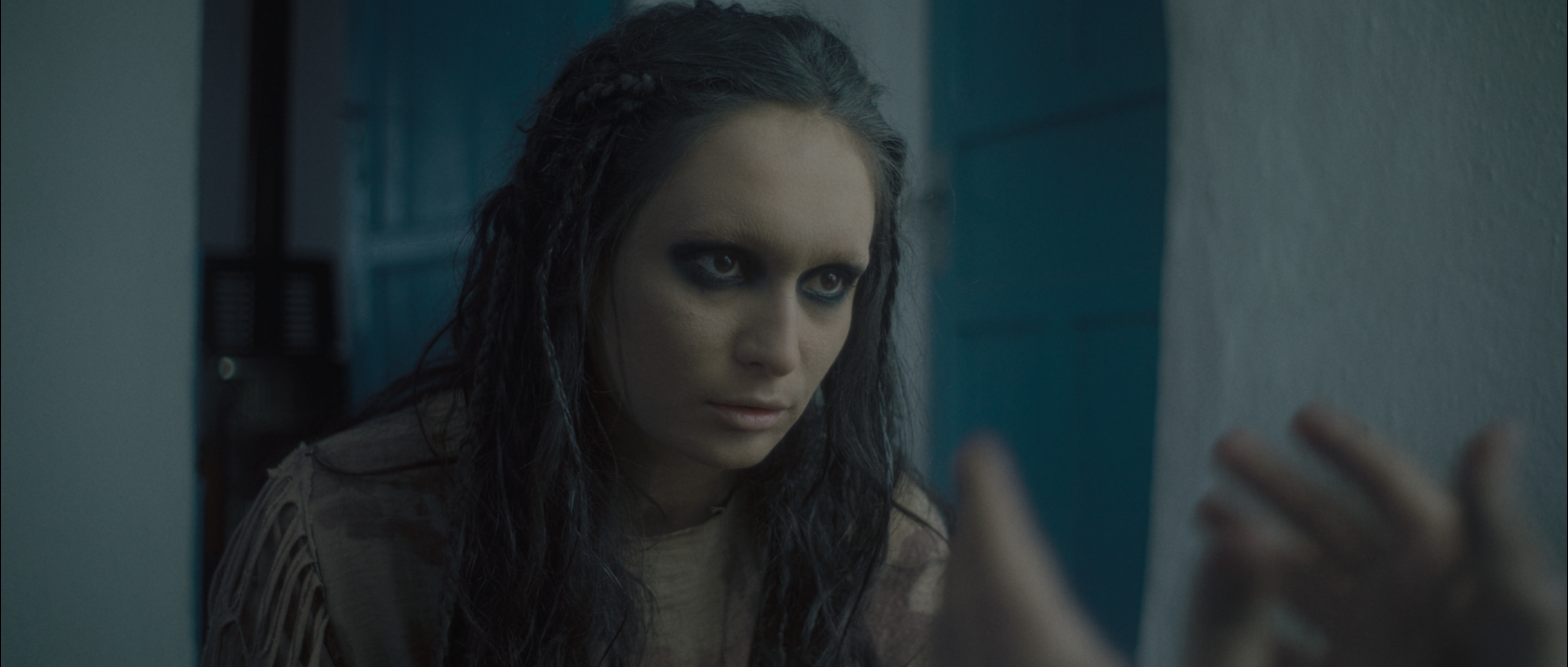
Back to Eja- if she would give in and accept the domination of Arif? Would she be able to teach the child to protect themselves? Arif plans a fighter. Who fights for the future and starts with the devotion request to the mother. He doesn’t need her magical gifts anymore- he got what he thought he needed and he requests a son. Could Arif teach the son to be a fighter and protect himself? Another oxymoron- the son must fit in into fathers wishes- how could he learn to develop strength and self-esteem?
Would Arif be able to protect Eja and the future son during pregnancy and childhood? How would he know that they need something if he is unable to listen?
We all know who the enemy is. We all know why we are in the situation. the fear to disappear haunts everyone. The communities are separated — pointing on each others with fingers- who is the predator, who is the hero and which strategy is right for survival. Everyone seems to know the answer- but others don’t believe them. Like these 2 parents. The question ghosts through all chats- we need to unite but how. If we will find finally the right strategy and convince the others. The child is the future of all of us. With the logic and the right arguments, we will find the solution. It’s the same discussion as the discussion around Crimean literature since decades- we need to write and to read, but first to speak perfectly the right language. 85% of people don’t speak good the language- so literature dies slowly. Does anyone see Eja? The ancient Crimean wisdom she is carrying without spoken words. The noise of the ego fight covers all her attempts to be heard. Rare people see the problem.
“If you will come finally in 10 years to visit us- I ll make the excursion for you through Bağçasaray parkingslots”- I have been told. “Yes, the others” I said quickly. “No, it’s us. Our restaurants destroy old houses to make space for tourists. “- the young Crimean ethnographic researcher answered desperately.
If Eja would agree to give in into Arif conditions and let neglect her wisdom? –We see the scenario unfolding in the other Crimean movie “Müptela” 2022 Canli production. We see the child — the child of the child- and Eja aka grandmother of the hero imprisoned in the big rich house. The hero drives through Crimea and sells soil. What started once with overhearing and ego won`t transform into equality later. Disconnected from the roots and ancestral wisdom the man represents the promised bright future. He cares about Eja- gives her food and all material goods. What went wrong, where is the mistake? In the culminant happy ending the voice of the parents reaches the child- the missing puzzle matches. The hero won`t need the miracle though- if he would listen to his grandma. In both so different stories we see the same pattern- neglection of female wisdom, the indigenous magic and ancient Crimean mysticism.
………………………………………………………
The golden cradle
Everyone knows the Crimean myth about the Golden Cradle (Altın beşik) *- Crimean Tatar knows it, Crimean Karaim as well. The symbol of Crimean wisdom, rebirth and the unification. It started to appear as the magical “holy grail “in the modern Crimean literature- usually enlightening the hero, bringing back to him the forgotten ancestral memory. Giving him strength and ability to travel through time, to change the flow of history. Even to meet Gasprinsky * * who could help again with his magic wisdom to lead and to unite the Crimean people. The deep wish to make genocides unhappen and the deep wish to secure the future.
Anyway, we don’t need to travel through the time thanks to the power of digitalization- it takes a weekend to dive a bit into ideas of Ismail bey. His realization of the golden cradle concept was very close to the mythological concept- the promised child can only survive if it will be raised in a special nurturing cradle- healthy, educated and strong. Every era has their own requirements- he adapted perfectly to his time. It takes a village to raise a child- Gasprinsky raised not only his blood children, but many others. Independent thinkers, equipped with knowledge and table to take responsibility. Moreover, one of his own children opened the doors into the future for crimean women. She was a dauther. Not a son.
Every good artwork finds precisely our hidden pain spot. “The son like me. To continue the ancestry”. Well, despite the different religions I figured out very often in readings and conversations that the cultures of Crimean people were pretty similar. As my Dad was the only child- my non-Karaim mother got the ring of my ancestors- a tiny antique golden with a rhombus filled with small diamonds and rubies. I don’t know if it was 100 or 200 years old. I didn’t knew the exact price — it just looked so mysterious like the eye of the magic reptile. To be honest my mom didn’t like Karaim culture anyway, but the noble heritage of my family filled her, who got as the first in the family the high school degree with pride. “We are intelligencia since many generations” — used her to tell everyone. The family jewelry on her finger completed her belonging. In the bouquet of complex feelings around this topic one became very prominent- why don’t I get the ring? It’s my ancestry, not her. “You are a child; you will lose it”- she used to explain. “Wait till you will grow up”.
.............................................................................................................................................
*“Golden Cradle” (Altyn-Beshik) is a well-known legend of the Crimean indigenious people about a priceless relic hidden in the caves of the Crimean Mountains (most often Mount Basman or Isar-Kaya is mentioned). According to the tales, the cradle is enchanted: it brings good fortune but destroys those who dare to search for it without a talisman. It is considered a symbol of the greatness of Crimea.
** Ismail bey Gasprinsky (20 March 1851 — 24 September 1914) was a Crimean Tatar intellectual, educator, publisher. He was one of the first muslim ntellectuals in the Russian Empire who realized the need for education and cultural reform and modernization.
............................................................................................................................................
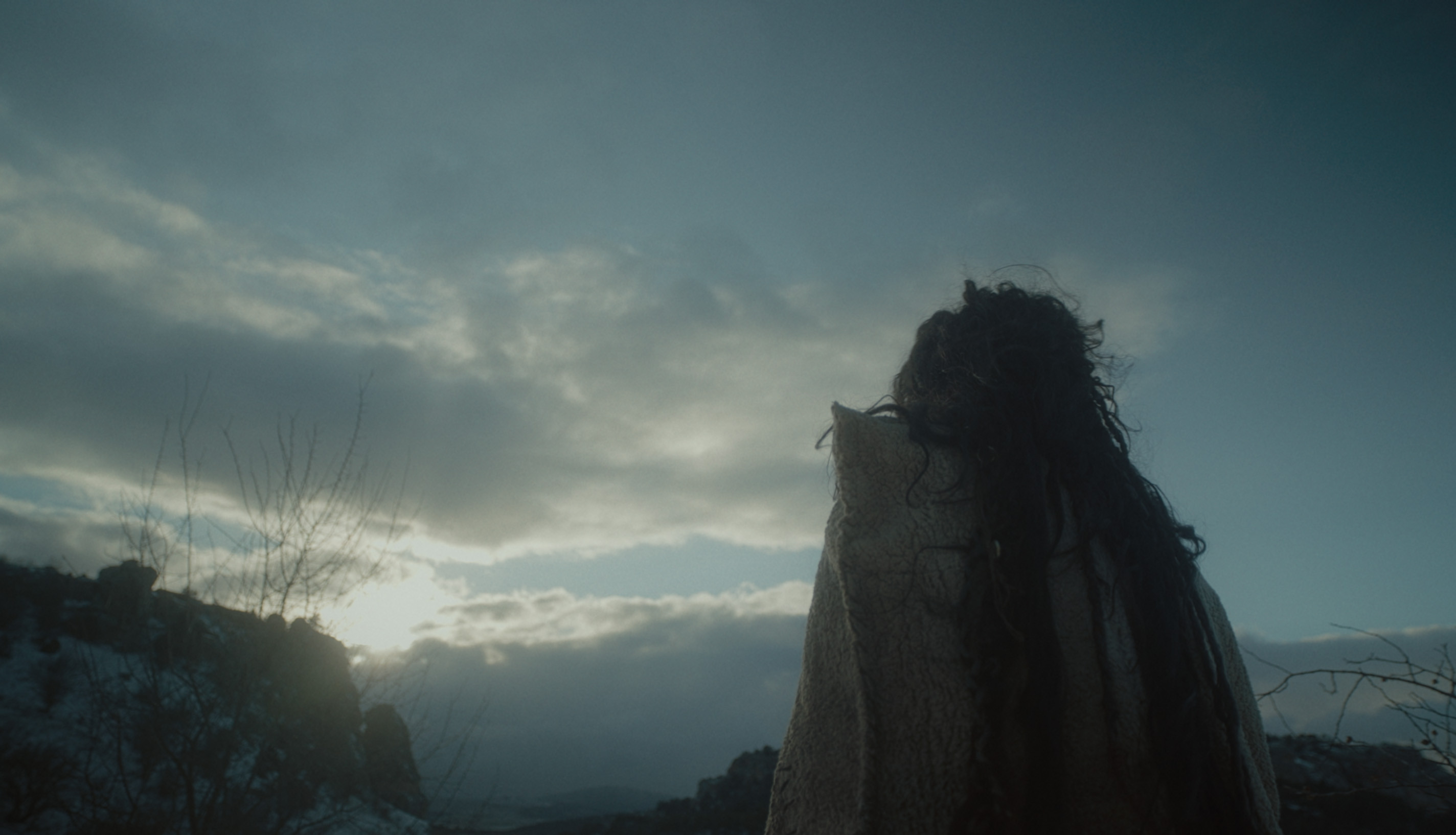
I grew up. The voices of ancestors reached me and I became the only one crimean karaim activist in Germany. The last qaray. I know what solitude is.
The Dad passed away and my brother will get all silver spoons with family monograms, the family album and the ring. Because he is the son. He also askes the questions about his identity, but he is buzy. His wife is a Russian, a good one. My Russian mom passes my family symbols to the next Russian. Good luck –thoughts about it cause tiny jeleausy picks. I am not the son.
But I got immaterial gifts- and I indeed raised a promised child. He is german and Crimean at the same time. His character is exact copy of my dad and he got the linguistic talent of his grangrandgrandpa- already speaks latin, learning ancient Greek and can sing couple of songs in Crimean tatar. To be more accurate -we are two crimean karaim activists in Germany — me and my son. I didn’t choose his gender- I wished a girl. But he turned out so perfect how I never could imagine- through unplanned connection of genetics and epigenetics. Because of us many people got to know that we exist. What is the future of Crimean Karaim? We are only few left, most of us mixed ethnical- since 100 of years the community opened the marriages.
Who are Crimean Karaim? All Crimean ethnicities evolved through thousand of years mixing with newcomers- the names changed, the religions changed, the languages evolved. Every time the new wisdom was added to the older, new skills. One thing never changed- the Eja. The Eja is the voice of Crimea, the connection to the magic of our ancestors. If it lives in us- it doesn’t matter which name, we will choose. We will continue to pass the Eja through generations.
After I watched the movie I found my freedom- I recognized that the universe is bigger than all of us could imagine. It’s supposed to be masculine in all cultures to plan the future, to fight the enemy and to control the outcome. Like Arif tries. We all try to control and forget in our internal fights that we lost the focus what is it about. How could we all unite with all different dogmas and opinions? It’s About Eja-Crimea-the soil. We don’t listen to her, don’t trust our intuition, became stir and tense. And she goes back into the mountain, hides with the promised child aka golden cradle — because we are not ready like Arif.