*I am Eja* by Leo Efet
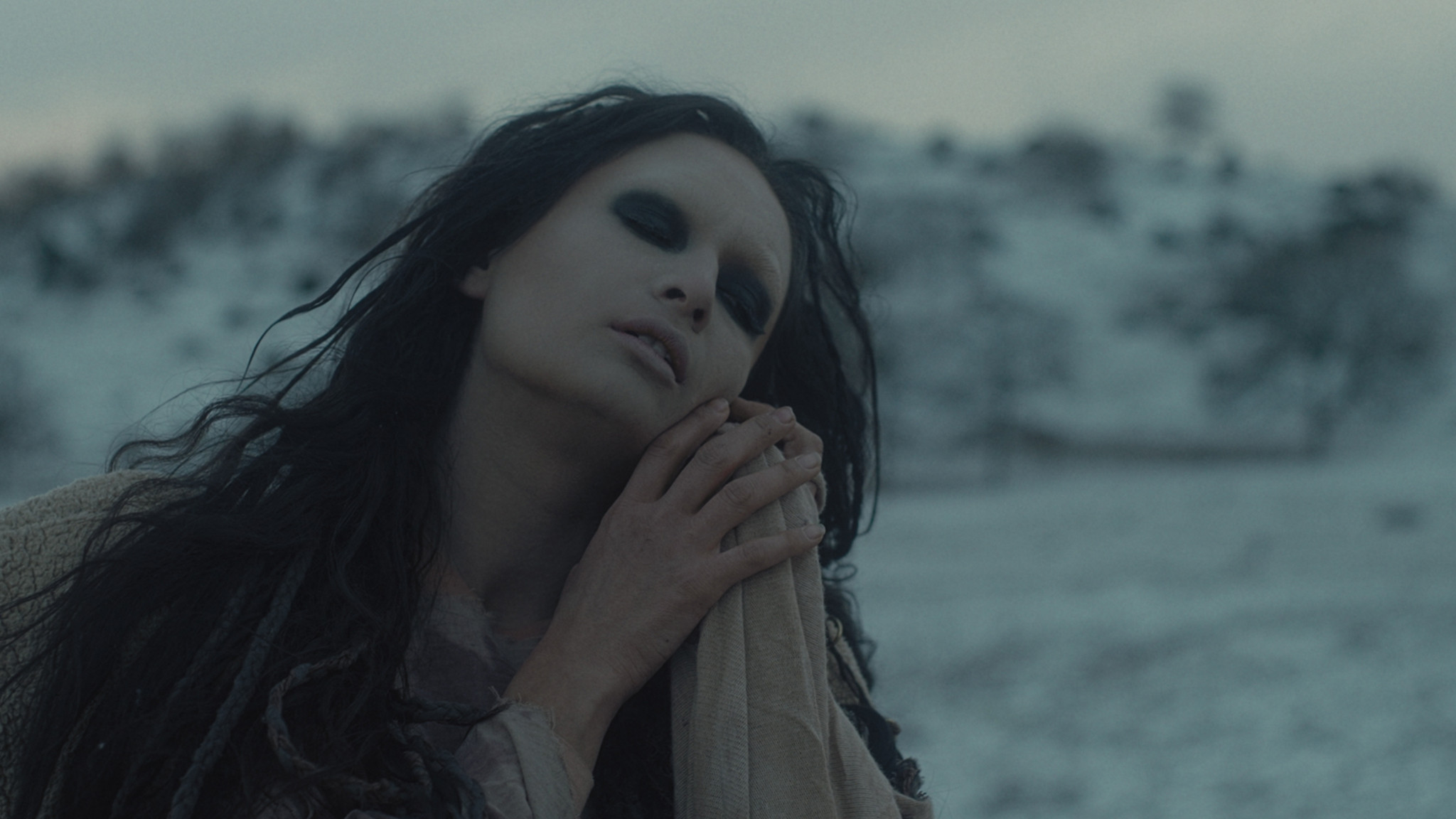
https://youtu.be/mYWr4wz9w28?si=A_4GYnOUvZBR6iGR
The Crimean art scene has gained a new movie: one of the rare movies in the Crimean Tatar language and truly the "first apocalyptic" philosophical movie, one could say, if the term "the first Crimean" isn’t exploited too often.
The dreamy, calming, lonely landscape, the universal questions we are all trying to address, and multiple layers full of symbolism are packed into 30 minutes. I am writing from the Qırımqaray (Crimean Karaim, one of the indigenous ethnicities of Crimea) perspective, though. On the one hand, we are all even more the last Arif. Who knows better than I the feeling of being the last of the Mohicans, of being unable to arrive somewhere, of being caught between pan-Turkism and pan-Judaism and frequently erased from everywhere? I am trying to address the question of what indigeneity means today. How do we survive if the community is small in numbers, dispersed and scattered around the world, and even those who left cannot communicate with each other because of different beliefs?
Back to the movie: beautiful modern aesthetics, no fes*, no qaytarma**, nothing that would visually address the Crimean indigenous symbolism we are used to. Still, the resonance was strong: "That’s us, that’s our situation, that’s our apocalypse," among Crimean communities. One could fill pages with a detailed description and analysis of the visuals, but that was never my style, and I will leave that field to others. I will jump straight into the symbolism.
..........................................................................**Fes is an essential headwear for women’s Crimean indigenous costume. It is a hat made of velvet or satin, which can differ in shape (cylindrical, in the form of a truncated cone) and in decoration: embroidered with gold thread, decorated with coins, galloon, filigreed finials.
**Qaytarma (lit. "Returning"; also written as Haytarma) is a form of Crimean folk dance and music characterised by cyclical motion. It is most often performed at weddings and on holidays
.€&....................................................................
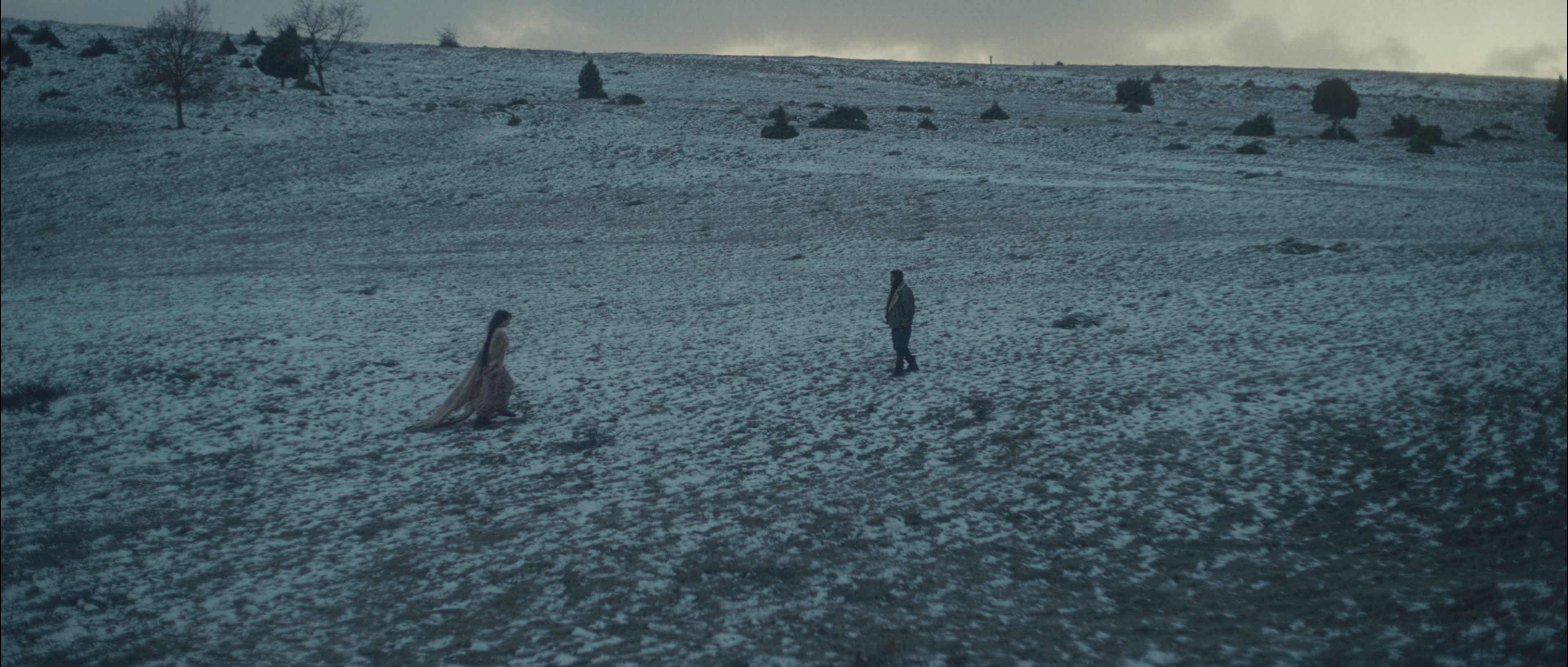
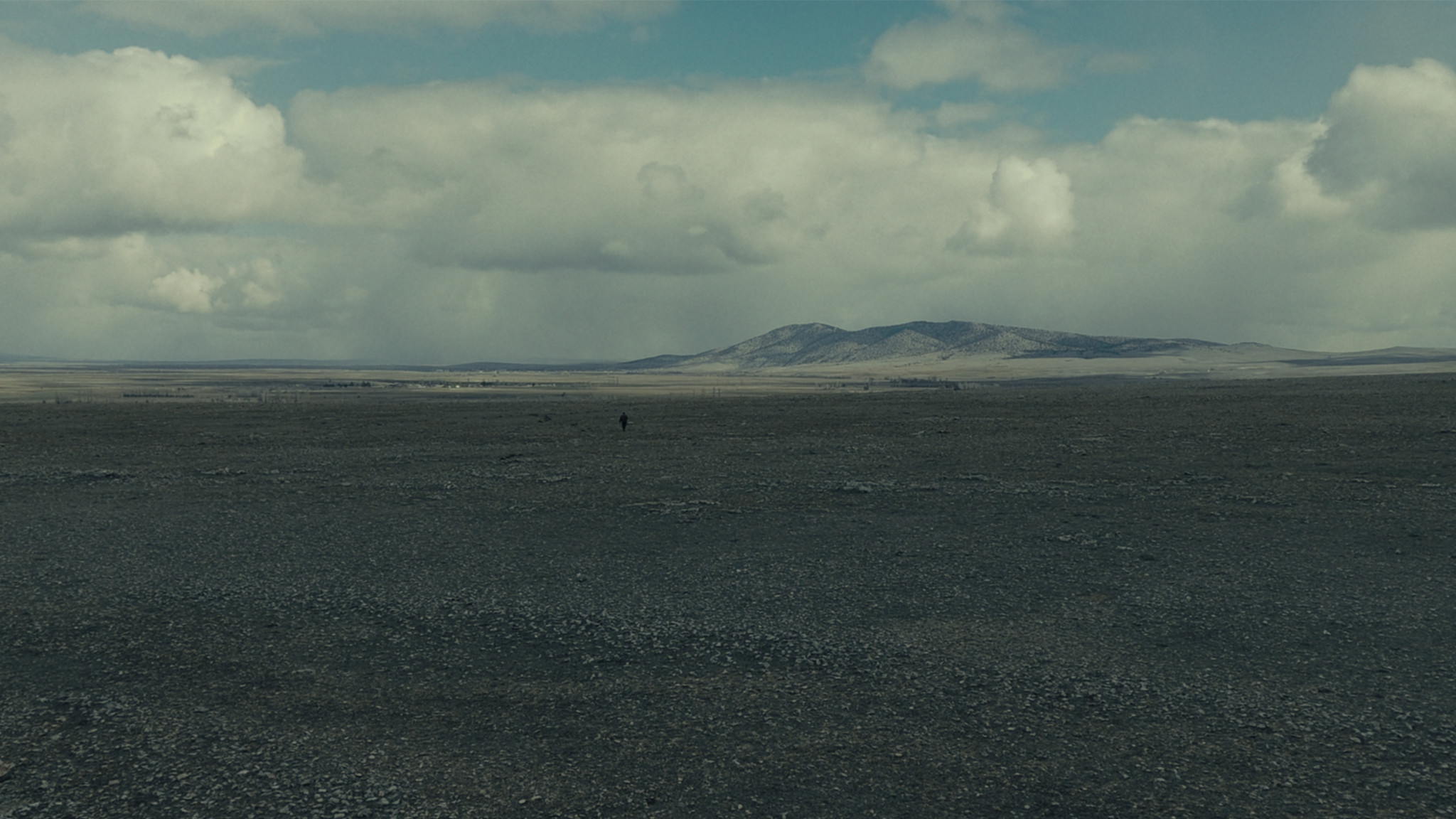
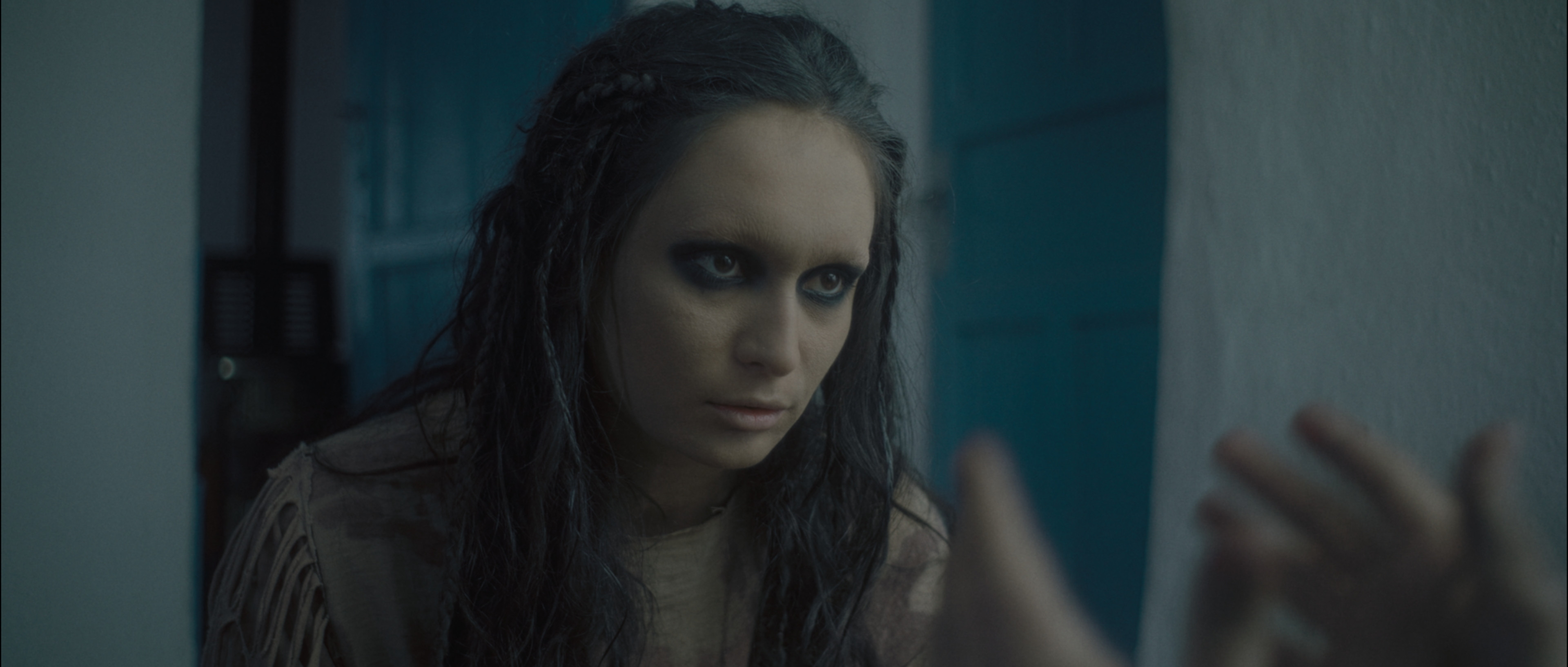
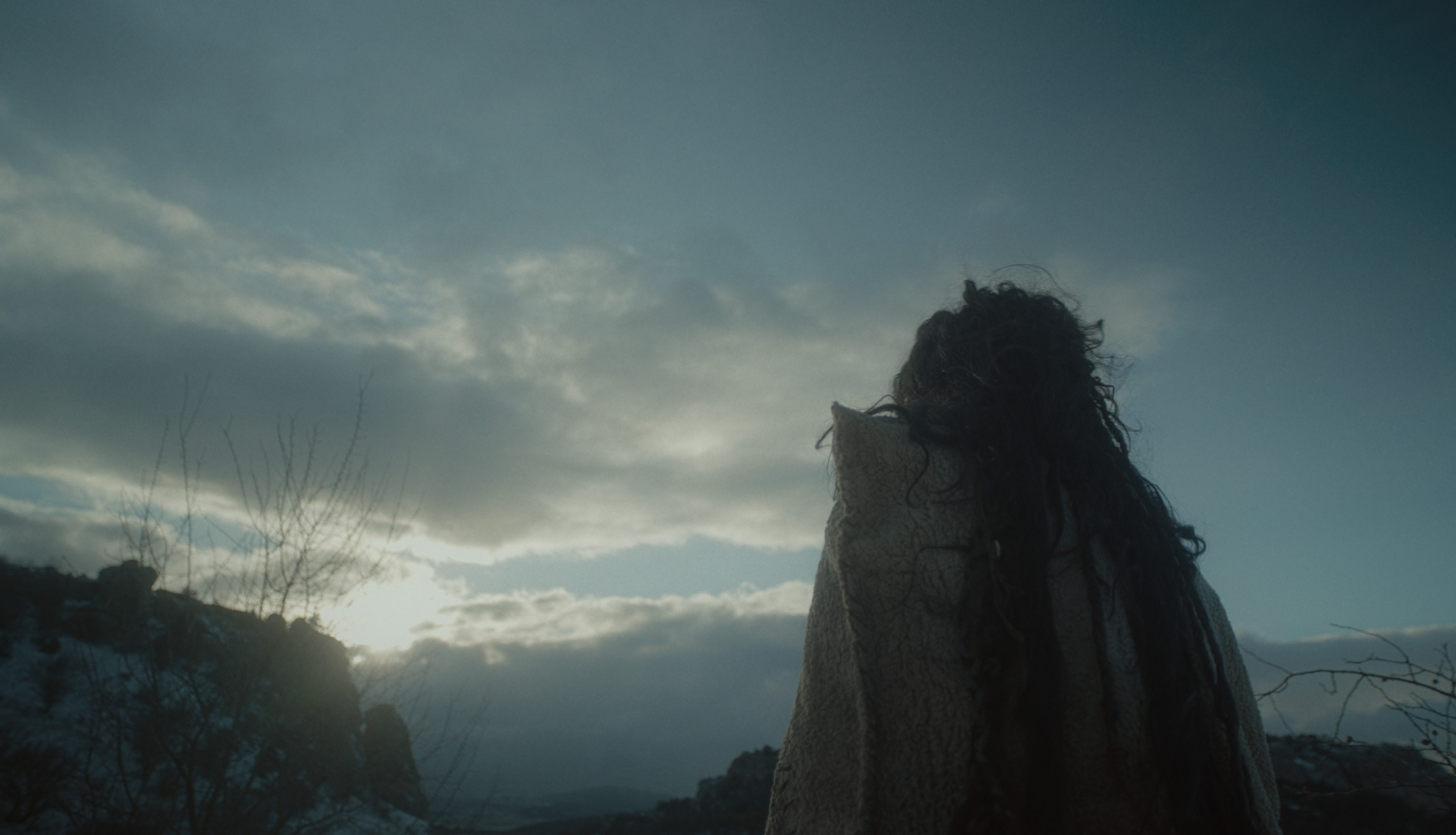
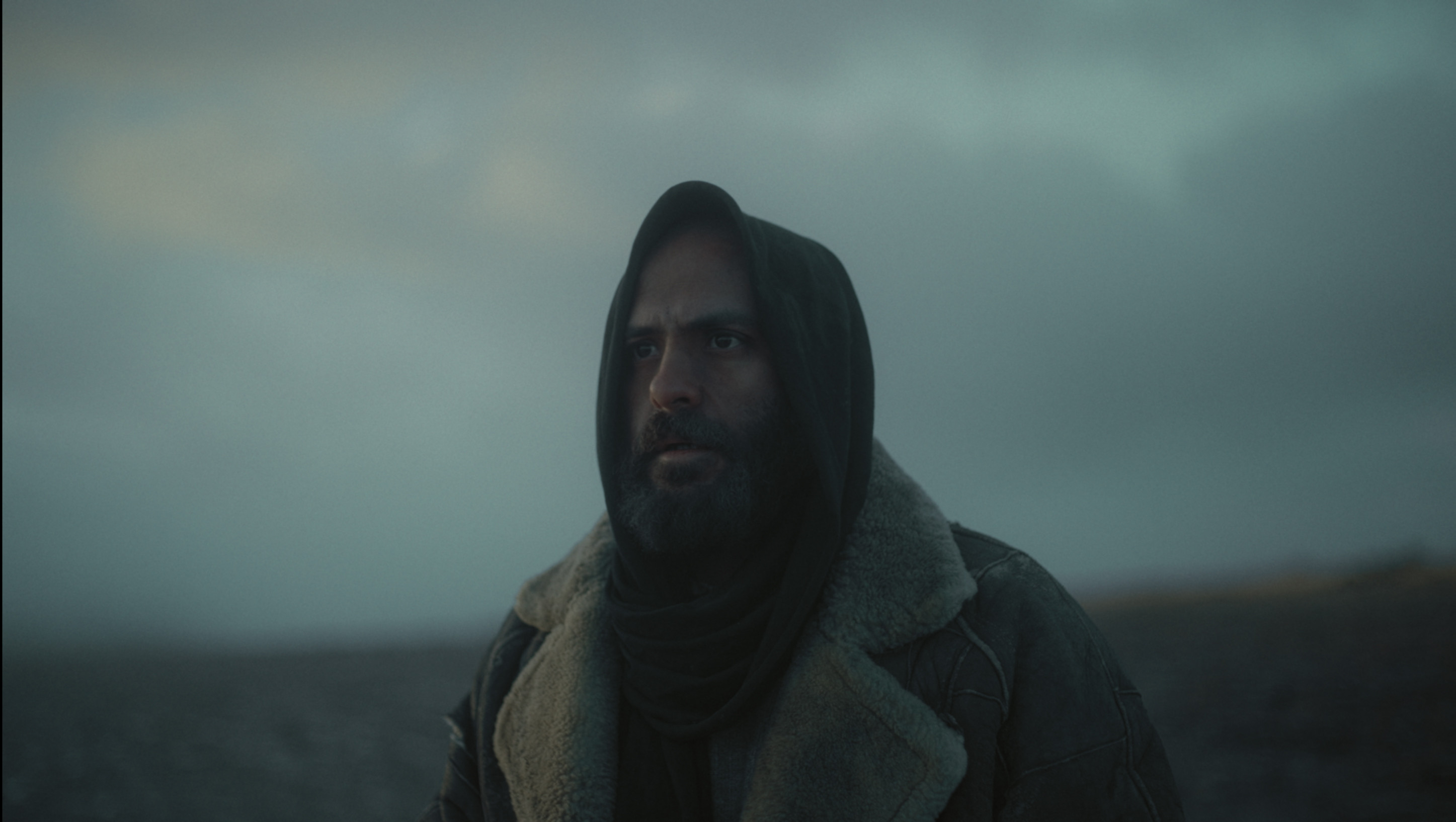
We see the man, alone, in a world that, as many understand it, is apocalyptic. Going into the mountains and seeking solitude is one of the oldest spiritual practices on earth, common in nearly all religions. We don’t know what happened or why he is there. He doesn’t know either. The man has many questions and no answers. Solitude and loneliness are the same but different: it is always an individual point of view how we fill the space with meaning. His loneliness is short, though. Through a miracle, or rather, as perceived, through his awakening and request, a woman comes. She doesn’t appear like magic; we clearly see a conscious decision to leave her mountain and walk step by step towards Arif. She is active, he is passive: a beautiful oxymoron set against the ancient categorization of male and female energy.
<>
..........................................................................
Very quickly we witness that they have different talents, continuing the theory of gendered energy. He owns logic and civilization: the spoken word and fire (the ability to cook food). How far does it take him in his survival? The woman is less equipped with skills, seemingly wild. He feeds her, as an allegory of modern gender roles: the man who provides the house, the income and everything else for his family. She replies with gratitude and gives him what he asks for. She uses her ancient knowledge and guides him through the landscape with mysticism and telepathy; the lover melts into the mother Arif doesn’t remember anymore.
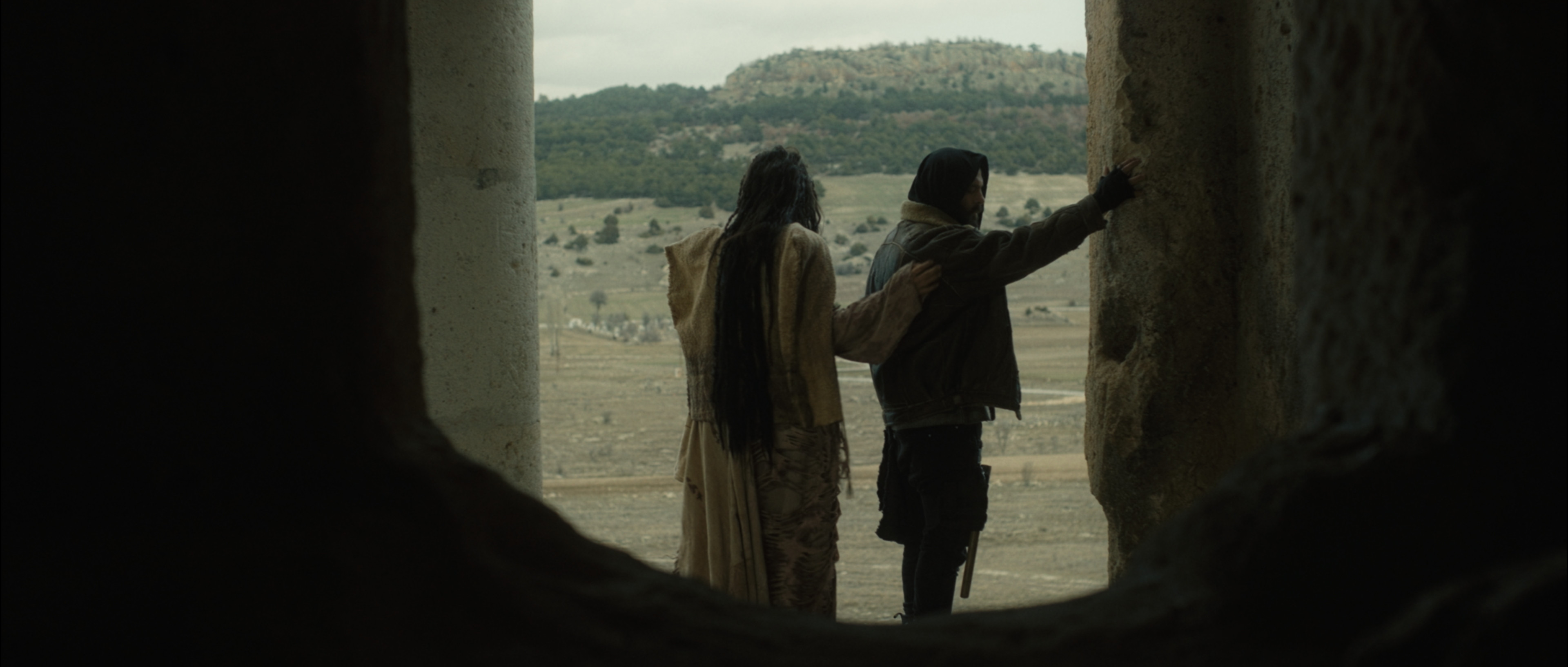
I was catapulted at light speed out of something modern and progressive into Crimean magic. I recognized myself, my own story, my painful process of transformation and self-identification. I recognized myself in both: I was Arif asking questions, and deep in my body Eja was awakening and whispering guidance to me. My Eja was never asleep, but growing up in Europe and getting a natural-science education made me not believe her. She wasn’t silent; she had been loud since my early childhood and visited me in my dreams and in visions during the daylight. I listened to stones and trees as Arif does at the old castle, which reminded me of Çufut Qale*. I listened to the hidden stories of the past. Sometimes it came as just a very simple melody, hard to hear in a crowded space. At other times it came with the power of an orchestra and the shadows of former generations in an ancient ruin far away from everything, with enough air and space for all sensations. Eja’s voice was always there and she tried hard, but it made me anxious. I had to cover myself with the heavy, thick coat of depression, stiffness and grey so she could not touch me. At night I avoided sleeping in the dark; I feared nightmares. I feared visitors. I felt their presence in the darkest room like blurred shadows. Often I woke up because of a pressure on my chest. "If I could cry loud, they would go away," I thought in the ever-same dream.
............................................
*Çufut Qale (Karaim: Кала, קלעה, romanized: Kala) is a medieval city-fortress in the Crimean Mountains that now lies in ruins. It is a national monument of Qırımqaraylar (Crimean Karaim) culture and the historical center of the community, located just 3 km east of Bağçasaray, the former capital of the Crimean Khanate.
......................................................................................................................#<
..........................................................................................................................................
I met my Eja in the loneliest place of my life. My ancestors, whom I hadn’t been thinking about, reached out and asked me to pray for them. I didn’t know how to pray. "Just pray, you will find the right words."
Blessed be you, Adonai
Inside of me,
The connection of all space and time
The ancestry spread through the galaxy
I can hear their words
When I look to the stars
We are making the law
My hair is oak branches
My feet grow through the
Earth
My scream connects the upper and lower
WORLDS
The sparks of my neurons fire and activate <
> the neurons of all interconnected galaxies
<#>
As I finally looked into her face, the fear was gone and made space for unbearable grief. I felt everything at once: the tears of all the generations before me, the anger about my dumbness, and a love I didn’t know I was able to feel. She never gave me clear answers, just like the Eja in the movie, but with time I understood that her language was simply different. Human language is a tool, an imperfect tool. Detailed descriptions still don’t give us answers, because we humans lack the ability to understand the universe. How can we describe something we don’t know? We describe, and describe, and describe, without noticing that the truth has escaped.
………………………………………………………………>
The pregnancy
Usually, all medieval fairytales end there. The main goal is that the lovers unite. What happens after is never told. What is the ideal of love in a perfect world? The pregnancy. The child of love: the allegory of hope and survival. Future generations. The seed. The promise to become a flower. The tender moment is surprisingly destroyed immediately. Arif needs a son, a male descendant to secure his bloodline. In his eyes Eja is degraded to a vessel; it is her duty to lend her body to carry a son like him for the next nine months.
My dad was the only late child out of his grandparents' five children. The war. The displacement. Sometimes I think I’ll never know if there were children before him. When I got pregnant with my first child, panic started to haunt me. Intense fears of miscarriage, the pressure to eat well, sleep well, do yoga, do everything for this vulnerable fruit inside of me. I heard his heartbeat in a cosmic enlightenment and simultaneously carried the whole weight of transgenerational responsibility. The fairytales never told us what came after.
The statistics did. I live in democratic Europe with high health and living standards. Nevertheless, postpartum depression is a thing. Young mothers are overwhelmed by pressure and stress. Good young fathers help; bad ones don’t. Fathers who take equal responsibility are a rare species. Sometimes the love goes away. Single motherhood is one of the most frequent causes of child poverty. It takes a village to raise a kid.
Recently a horrible case of grooming and murder of a teenage girl became public. Who the villain and outer enemy was became clear very quickly. Later other details came out: a single, overwhelmed mother of three, one child with disabilities. A distant father. A lack of communication in traditional families, with no sex education or digital safety education.
Back to Eja: what if she gave in and accepted Arif’s domination? Would she be able to teach the child to protect themselves? Arif plans a fighter, someone who fights for the future, and he starts with the request for devotion from the mother. He doesn’t need her magical gifts anymore; he got what he thought he needed, and he requests a son. Could Arif teach the son to be a fighter and to protect himself? Another oxymoron: the son must fit into the father’s wishes, so how could he learn to develop strength and self-esteem?
Would Arif be able to protect Eja and the future son during pregnancy and childhood? How would he know that they need something if he is unable to listen?
We all know who the enemy is. We all know why we are in this situation. The fear of disappearing haunts everyone. The communities are separated, pointing fingers at each other: who is the predator, who is the hero, and which strategy is right for survival. Everyone seems to know the answer, but others don’t believe them. Like these two parents. The question haunts all the chats: we need to unite, but how? If we finally find the right strategy and convince the others. The child is the future of all of us. With logic and the right arguments, we will find the solution. It is the same discussion that has been going on around Crimean literature for decades: we need to write and to read, but first we must speak the right language perfectly. 85% of people don’t speak the language well, so the literature dies slowly. Does anyone see Eja? The ancient Crimean wisdom she carries without spoken words? The noise of the ego fight covers all her attempts to be heard. Few people see the problem.
"If you finally come to visit us in ten years, I’ll give you a tour through the Bağçasaray parking lots," I was told. "Yes, the others," I said quickly. "No, it’s us. Our restaurants destroy old houses to make space for tourists," the young Crimean ethnographic researcher answered desperately.
What if Eja agreed to Arif’s conditions and let her wisdom be neglected? We see that scenario unfolding in the other Crimean movie, "Müptela" (2022, Canli production). We see the child, the child of the child, and Eja, here the grandmother of the hero, imprisoned in a big, rich house. The hero drives through Crimea and sells soil. What started once with not listening and ego won’t transform into equality later. Disconnected from his roots and ancestral wisdom, the man represents the promised bright future. He cares about Eja and gives her food and all material goods. What went wrong, where is the mistake? In the culminating happy ending, the voice of the parents reaches the child and the missing puzzle piece fits. The hero wouldn’t have needed a miracle, though, if he had listened to his grandmother. In both of these very different stories we see the same pattern: the neglect of female wisdom, of indigenous magic and ancient Crimean mysticism.
……………<>%
The golden cradle
Everyone knows the Crimean myth of the Golden Cradle (Altın beşik)*. Crimean Tatars know it, and so do Crimean Karaim. It is a symbol of Crimean wisdom, rebirth and unification. It has started to appear as a magical "holy grail" in modern Crimean literature, usually enlightening the hero and bringing back to him the forgotten ancestral memory. It gives him the strength and ability to travel through time and change the flow of history, even to meet Gasprinsky**, who could once again help with his magical wisdom to lead and unite the Crimean people. It expresses the deep wish to make genocides unhappen and the deep wish to secure the future.
Anyway, we don’t need to travel through time. Thanks to digitalization, it takes a weekend to dive a bit into the ideas of Ismail bey, and to discover that he was not alone. The realization of the golden cradle concept was very close to the mythological one: the promised child can only survive if it is raised in a special nurturing cradle, healthy, educated and strong. Every era has its own requirements, and he adapted perfectly to his time. It takes a village to raise a child, and in Crimea the village is diverse.
Ilya Kazas***, the great and forgotten Karaim teacher and thinker, brought university-level education to simple Karaim and Crimean Tatar schools. His work was a cradle for the further development of university education in Crimea and brought the skills for understanding the ancient wisdom of all our ancestors. It helped to raise independent thinkers, equipped with knowledge and able to take responsibility. Moreover, one of his own children opened the doors to the future for Crimean women. She was a daughter, Anna. Not a son. And it is also our fault as a Karaim community that his and her memory and achievements were not cherished enough. We all know who the enemy is. I choose to start with ourselves.
Every good artwork finds precisely our hidden pain spot. "The son like me. To continue the ancestry." Well, despite the different religions, I have found very often in readings and conversations that the cultures of Crimean peoples are pretty similar. As my dad was an only child, my non-Karaim mother received the ring of my ancestors: a tiny antique gold ring with a rhombus filled with small diamonds and rubies. I don’t know if it was 100 or 200 years old. I didn’t know the exact price; it just looked so mysterious, like the eye of a magic reptile. To be honest, my mom didn’t like Karaim culture anyway, but the noble heritage of my family filled her with pride, as the first in the family to earn a high school degree. "We have been intelligentsia for many generations," she used to tell everyone. The family jewelry on her finger completed her belonging. In the bouquet of complex feelings around this topic, one became very prominent: why don’t I get the ring? It’s my ancestry, not hers. "You are a child; you will lose it," she used to explain. "Wait till you grow up."
..............................................................................................@
*"Golden Cradle" (Altyn-Beshik) is a well-known legend of the Crimean indigenous people about a priceless relic hidden in the caves of the Crimean Mountains (most often Mount Basman or Isar-Kaya is mentioned). According to the tales, the cradle is enchanted: it brings good fortune but destroys those who dare to search for it without a talisman. It is considered a symbol of the greatness of Crimea.
**Ismail bey Gasprinsky (20 March 1851 — 24 September 1914) was a Crimean Tatar intellectual, educator and publisher. He was one of the first Muslim intellectuals in the Russian Empire to realize the need for education and cultural reform and modernization.
***Ilia Ilyich Kazas (1832–1912) was a prominent Crimean Karaite educator, poet and public figure. As the first Karaite with a higher university degree (graduating from St. Petersburg University, knowing 11 languages), he significantly advanced education and cultural life in Crimea. He initiated the creation of the Tatar Teachers' School in Simferopol, directed the Alexander Karaite Spiritual Seminary, and edited local publications such as the newspaper Tavrida.
............................................................................................................................................... (&
I grew up. The voices of my ancestors reached me and I became the only Crimean Karaim activist in Germany. The last Qaray. I know what solitude is. Dad passed away, and my brother will get all the silver spoons with family monograms, the family album and the ring, because he is the son. He also asks questions about his identity, but he is busy. His wife is Russian, a good one. My Russian mom passes my family’s symbols on to the next Russian. Good luck. Thoughts about it cause tiny pangs of jealousy. I am not the son. Recently I discovered it was not her choice. It’s not always about the outer enemy. The victims of colonisation (see Fanon, Black Skin, White Masks) are affected precisely this way.
But I got immaterial gifts, and I indeed raised two promised sons. They are German and Crimean at the same time. The younger one’s character is an exact copy of my dad’s, and he got the linguistic talent of his great-great-grandfather: he already speaks Latin, is learning ancient Greek and can sing a couple of songs in Crimean Tatar. The other one is discovering his roots right now, suddenly awakening with the precision of a clock mechanism. He says he inherited the best of all worlds.
We are three Crimean Karaim activists in Germany: me and my sons. I didn’t choose their gender; I wished for girls. But they turned out so perfect, in a way I could never have imagined, through an unplanned connection of genetics and epigenetics. Because of us, many people got to know that we exist. What is the future of the Crimean Karaim? Only a few of us are left, most of us of mixed ethnicity, since the community opened up marriages hundreds of years ago.
Who are the Crimean Karaim? All Crimean ethnicities evolved through thousands of years of mixing with newcomers: the names changed, the religions melted, the languages evolved. Every time, new wisdom and new skills were added to the old. One thing never changed: Eja. Eja is the voice of Crimea, the connection to the magic of our ancestors. If she lives in us, it doesn’t matter which name we choose. We will continue to pass Eja on through the generations.
After I watched the movie I found my freedom. I recognized that the universe is bigger than any of us could imagine. In all cultures it is supposed to be masculine to plan the future, to fight the enemy and to control the outcome, as Arif tries to. We all try to control, and in our internal fights we forget what it is about. How could we all unite with so many different dogmas and opinions? It’s about Eja, Crimea, the soil. We don’t listen to her, we don’t trust our intuition, we have become stiff and tense. And she goes back into the mountain and hides with the promised child, the golden cradle, because we are not ready, like Arif.
The future is female….#%[<>*.
*Frantz Fanon (1925–1961) was a Martinican psychiatrist, philosopher, and revolutionary whose work became a cornerstone of postcolonial studies, critical theory, and studies on race. His seminal 1952 book Black Skin, White Masks (Peau noire, masques blancs) explores the psychological impacts of colonization, racism, and the internalization of inferiority among Black individuals in a white-dominated world.
Read also: **On Sacrifice and Agency** — a short reflection on moving indigenous politics beyond victimhood, mourning, and paternalism toward strategic expertise and real decision-making.*
https://syg.ma/@leoth/on-sacrifice-and-agency
Read also: **We Are Here And We Are Invisible** — a decolonial poetic fragment on survival, silence, and the complex realities of marginalized identities in Europe.* https://syg.ma/@leoth/untitled-129
>
Leo Efet works across poetry, performance, visual arts and research. Qırımqaraylar (Crimean Karaim, indigenous of Crimea).
Лео Эфет работает на стыке поэзии, перформанса, визуального искусства и исследований. Qırımqaraylar (крымские караимы, коренной народ Крыма).