Commemoration vs reductive consumerism
As the non-Western epistemologies are shaping trends within the contemporary art scene, the particular interest in Central Asian art is increasing, promoting the emergence of new hotspots (such as Bukhara Biennial and Tselinny Center of Contemporary Art in Almaty). At the same time, the diverse cultural heritage is often distorted by the globalizing reductive impulse: once labeled and absorbed into the international creative economy, the broader landscape of Central Asia diminishes into a homogeneous picture often framed by a nomadic lifestyle. Unfortunately, the oversimplified picture is the easiest to perceive when looking at a world map, so it successfully reproduces itself within the global creative economy despite the increasing interest in local art practices. So here’s the situation: while major international institutions declare their intention to embrace diversity of the global art scene, the generalization still prevails and the one-size-fits-all approach remains useful in framing “regional” identity and producing the Vibes.
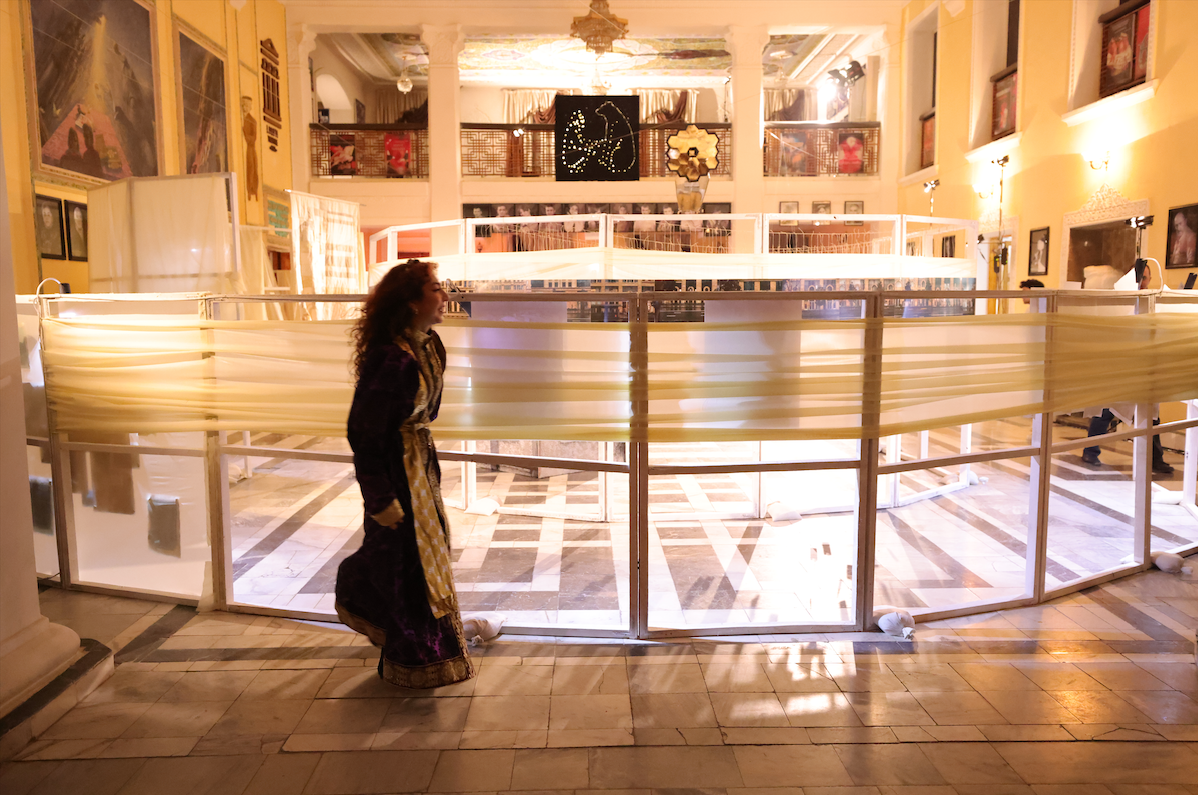
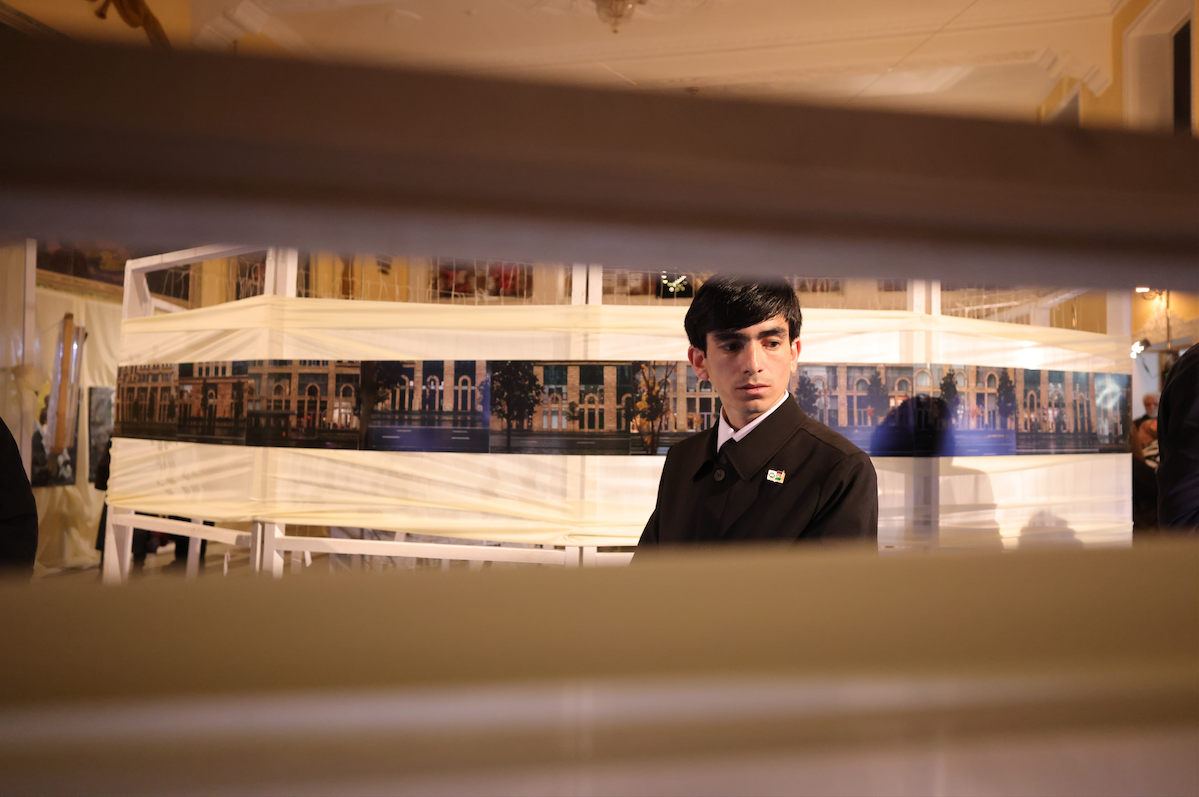
Being an external observer, I remotely participated in the development of an exhibition in Dushanbe — a project curated by Sano collective, an informally assembled curatorial and research group now based in the Tajik capital. My colleagues set out to collect memories of the local artists over the last 15 years and create their own Theatre of Memory. Since we didn’t regulate the themes and forms of the artists’ works, they turned out to be connected both to their personal existential experience and to the community’s past. In fact, the European model of a Theatre of Memory as a hierarchical structure conceived by Giulio Camillo just doesn’t work for such a sensitive and poetic form of commemoration.
We couldn’t overlook a peculiar, consistent pattern revealed in most of the artworks — that is a poetic approach, deeply rooted in small-scale stories and personal memories. Even if the final piece is to reflect a broad process such as the architectural decay of the city or climate change, the expressive form remains symbolic and personal. For instance, Karine Chalayan reconstructed the monotonous length of the first-floor facades, but with this formal choice she expressed the memory of her grandmother’s dementia. Shaima Gulbekova’s artwork presented an epic-scale story but revealed it as a personal drama — because it is the story of her own ancestrice, her great-grandmother who loved her servant and had a child with him, but was forced to escape by crossing the Panj River; finally, her trace was lost somewhere in the Pamirs — as it turned out, she became a healer. Renat Almukhamedov turned to his personal story but expressed himself referring to the postmodern clown character in Heinrich Böll’s novel. Nasiba Karimova and Nargis Abdunazarova recalled an old man who adopted a bear as a pet and became a spontaneous symbol of Dushanbe — the artists made a constellation of these two figures floating over the exhibition space.
Such a strong allegorical impulse is important for the Tajik poetic sensibility shaped by a literary tradition that dates back to close ties with Persian culture and Sufism with its introspective imagination. But today’s art practices, including the Theatre of Memory, show us that this ethnographic picture of heritage does not define the contemporary Tajik identity as it is far more complicated. Nor does the common nomadic myth determine this culture because it has a strong urban history.
Considering the introspective approach, we may use it as a tool for building and mediating relationships between the global artistic scene, still largely shaped by Western institutions, and the local creative communities that have their own way of understanding their identities — not through the general frameworks but through the multiple experiences and complicated practices of commemoration. At least for me, as an external observer, such an approach seems to be a possible alternative way to engage with the Tajik art community and to be helpful, particularly through this text.