In weakness
1.
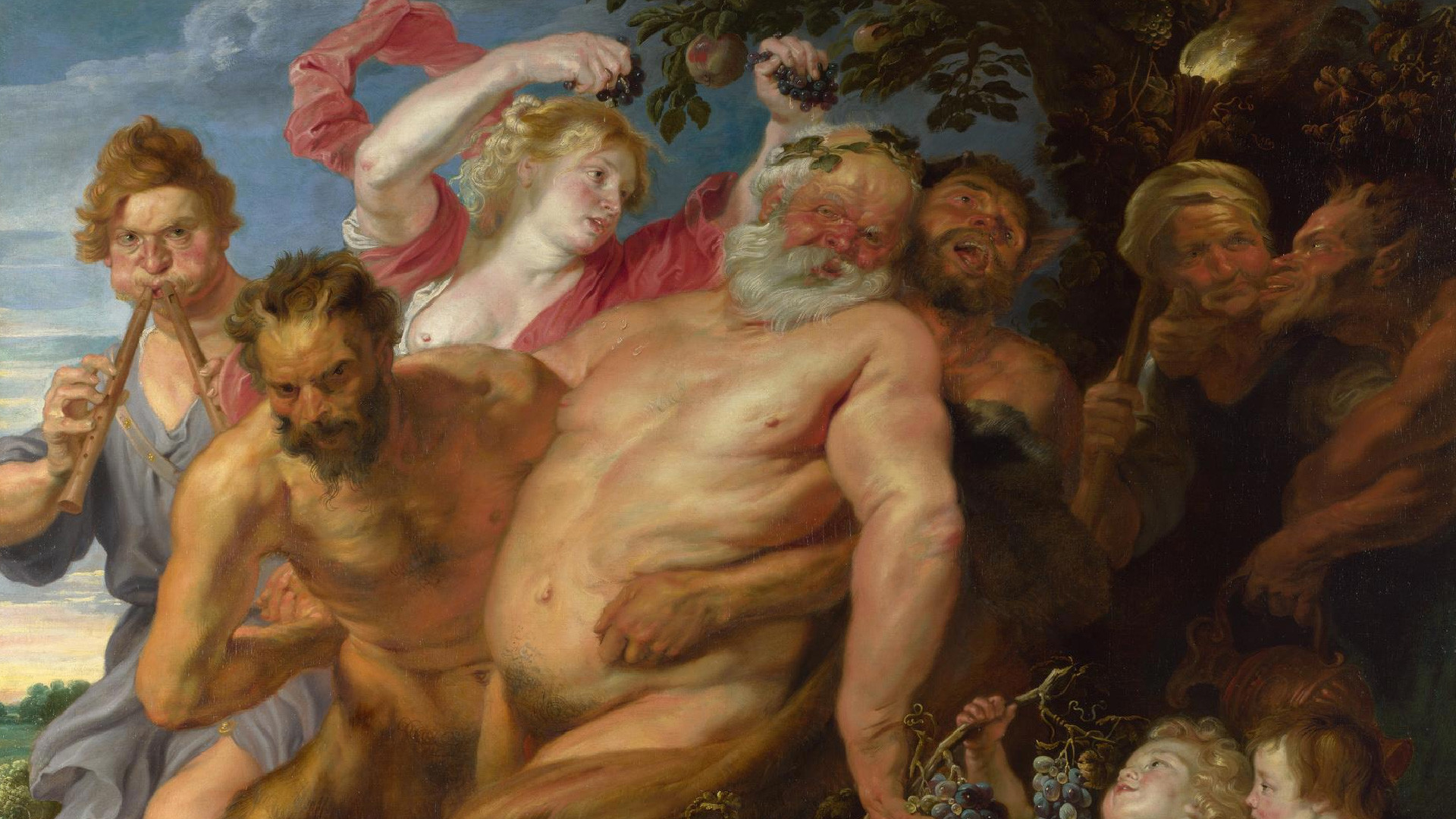
Silenus is said to have possessed a gift of prophecy — but only when he was drunk. A mixed attribute. Prophecy is neither intelligence nor wisdom; if anything, it is an observation that things falling within the same space determine the meaning of that space — causality, in this case, irrelevant, not worth an investigation.
In the Greek context, prophecy comes of a consumed goddess, becomes a recessive trait — sometimes inherited, sometimes suspiciously random. In one reading, Silenus could predate the Olympians, owing his gift to being born of the earth — or it could mean nothing. Narratively, it’s there to make his words indismissable, albeit to no particular end.
One would be excused in thinking Greek prophecy inherently linked with doom; it is rather linked with anxiety. Tragedy may be native to being born, but it is not total — it only appears so in a culture conscious of being built on conflicting grounds, living an instability where simple communal orders no longer work.
This is why stoicism gained that much currency in its time, and not through the most foundational of its writers, a former slave disabled since childhood, but an emperor during the Principate — it sees things in measurements of control. Knowing thyself is essentialist, a knowledge of your own limits — denoting also what can and can not be said.
Hence the flaying of Marsyas — a cruel display of form overcoming the self-destructive side of transgressive mania, and hinting also at the suppression of Orphic cults. A morality tale, as is the whole sequence, but perhaps unintentionally a warning against control.
Prophecy serves no control. It is without enforcement. Powers that be will perpetually attempt to usurp it, seemingly successful in select instances — but unlike power, prophecy couldn’t be codified, as the whole point of it is to speak the unspeakable. Even when it appears to reinforce a cosmic inevitability, the very fact of its pronouncement is transcendence.
But it is not truth; it is not fact. It is a color of unconcealment.
2.
Writing, when it matures into a life-long practice, seems to stem, at least partially, from a persistent foundational discontent: one has an unobstructed access to six thousand years of recorded literature, and is convinced that something is still missing, something they need to add.
Which is impossible. Momentary fulfillment aside, the inner literature does not make it onto the page, conditions of language incompatible with perfect cohesion. The first thing accomplished by writing it all down — is loss.
Worse yet, even our inner images of other writers are somehow deeper, broader, more variable while at the same time more consistent, built up partly on stylistic patterns impressed upon us from a select number of masterpieces unrepresentative of the entire corpus, and partly on our projections — all of which then collapse into the specificity of text when reading. The actual author is to their image what the actual writing is to an internal draft.
This creates a lot of misgivings: among them, a sense that artistic endeavor consists of bringing objects to their perfection instead of their own being. It breeds stagnation, an urge to affix something in place, straighten the pattern, take possession and replicate — perfectly consistent with the Boethian evil, but let’s not go there.
Things that are worth reading, and a small portion of which we have come to pronounce great — are still fallen, only in ways that are tensive, anomalous, singular in some way, and their reification is made up for in the dimensional moving world.
A poem, then, shares in the condition of sacred objects and living things: enduring their finite reality in a thin promise of something untouchable by the decay — the decay itself a multitude of things in the same condition, brushing against each other and so, in a certain sense, opening back up, even as they are spent in the process.
Thus the ontology of a written work is defined by the collapse and the reemergence of possibilities. It is a maturity of this middle condition that people engaged in literary discussions have come to call style.
3.
Reading the ethnographic collections of songs and chants one can appreciate the contrast between the individual and the common. Folk poetry sings the everyday struggles of hunting, child rearing, getting sick — and even when its particular cultural codes are impenetrable without a special inquiry, the vernacular always speaks of coherence.
Days follow days. Creatures live their habits. Songs serve both as the representations of the world and as the world itself.
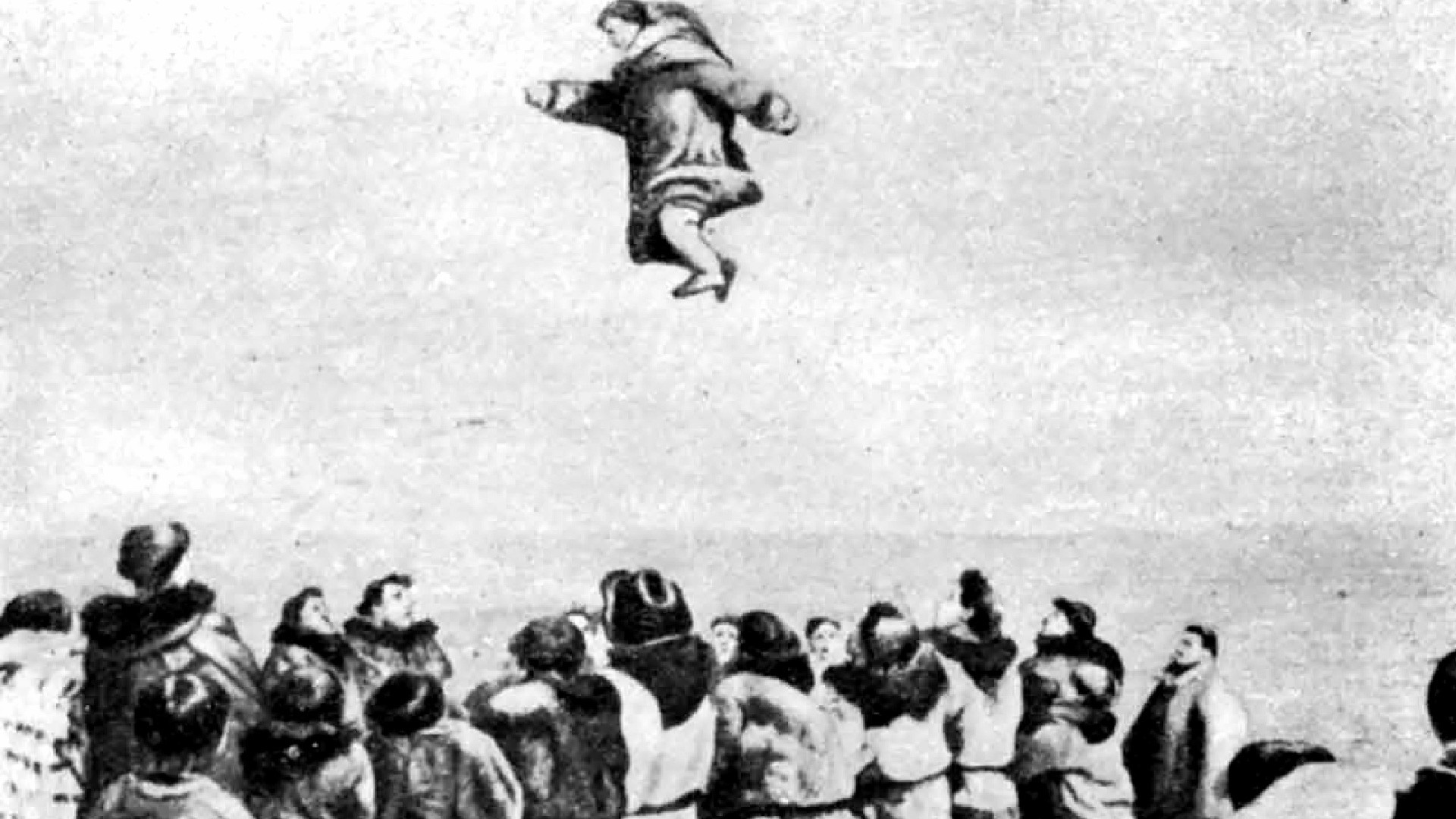
Ritual texts, by contrast, are mediator poetics, often composed by an individual for an individual purpose — to verbally realize a connection or an experience in a form irreducible to either intention, a measurable effect, or an immediate legibility. The words where, social significance notwithstanding, descriptions of things must be subordinate to their existence.
Such also was the dream of high modernism and kindred writings before that — bringing full forward the strange affinity between the compelling vividness of objects, and a particular complexity in the use of words.
Still, whether such poetry historically descends from the shamanistic — is less important than what this likeness means for an individual author. The reason there is and never will be a definition of poetry is because poetry is a metaphor we have for a process we do not understand.
Knud Rasmussen relays a now widely quoted saying of an Inuit guide that “we do not believe, we fear”. If it applies to a mediator, it must mean a fear of saying the wrong words, or in a wrong way, or with a wrong intention.
The post-industrial setting prescribes that art is to be treated with irony, particularly by the artists themselves — but irony is a defence mechanism, a methodical alienation, in the same way that cynicism is acceptance. Denying the risk inherent in using words, denies also their consequence. Paradoxically, the words that you don’t fear are also the ones you can not trust.
For an individual author it means that one that does not write as a mediator is writing against themselves.
4.
There is an ungenerous reading of Paul Celan’s “Der Meridian” address as a riposte against Adorno — the implication being, among other things, that a death camp survivor has only death camps to talk about fifteen years after the liberation.
Which would have been easy — either a lamentation unending or an elated rebirth. Others have gone there, certainly among the approved poets, and such was the expectation of general readership amidst the post-war prosperity: it was horror, and it was over, and that was that.
Celan is many things: a late Romanticist, a metaphysician and a theatrical trickster among them. There’s dark humour in some of his work, albeit rare. Bünchner appeals to him, no doubt, by way of fragmented expressiveness, not a historical setting (Danton insists there’s not much difference between the good and the bad times), and when the poem is said to be mindful of its dates, the date Celan has in mind is the one in “Lenz”.
So while his question, at core, is the truth of poetry, it is of anything but the literal content. A poem gains nothing simply from being right.
Whence the divergence? The artifice that Celan, Adorno and Büchner all argue against, each in his own way, treats everything as a given, self-evident, producing a culture that produces a world war, and reverts to itself so completely precisely because the calamity resupplies it with good judgements.
Therefore, the Encounter. We know of things external to ourselves by their resistivity, uncompliance — words and texts also. An achieved poem is self-assertive, a strangeness to face on the conditions one is not entirely clear about; not a statement about the world, but a result of a particular way of reaching that participates in it.
It promises no communion — indeed, some would warn this may lead to entrapment — but there’s also no knowing the world except through exposure, and therefore risk, a letting of something be done not by you, but to you. In a profound weakness, writing is tacit acceptance of its conditions, and through it — of being here.
CODA
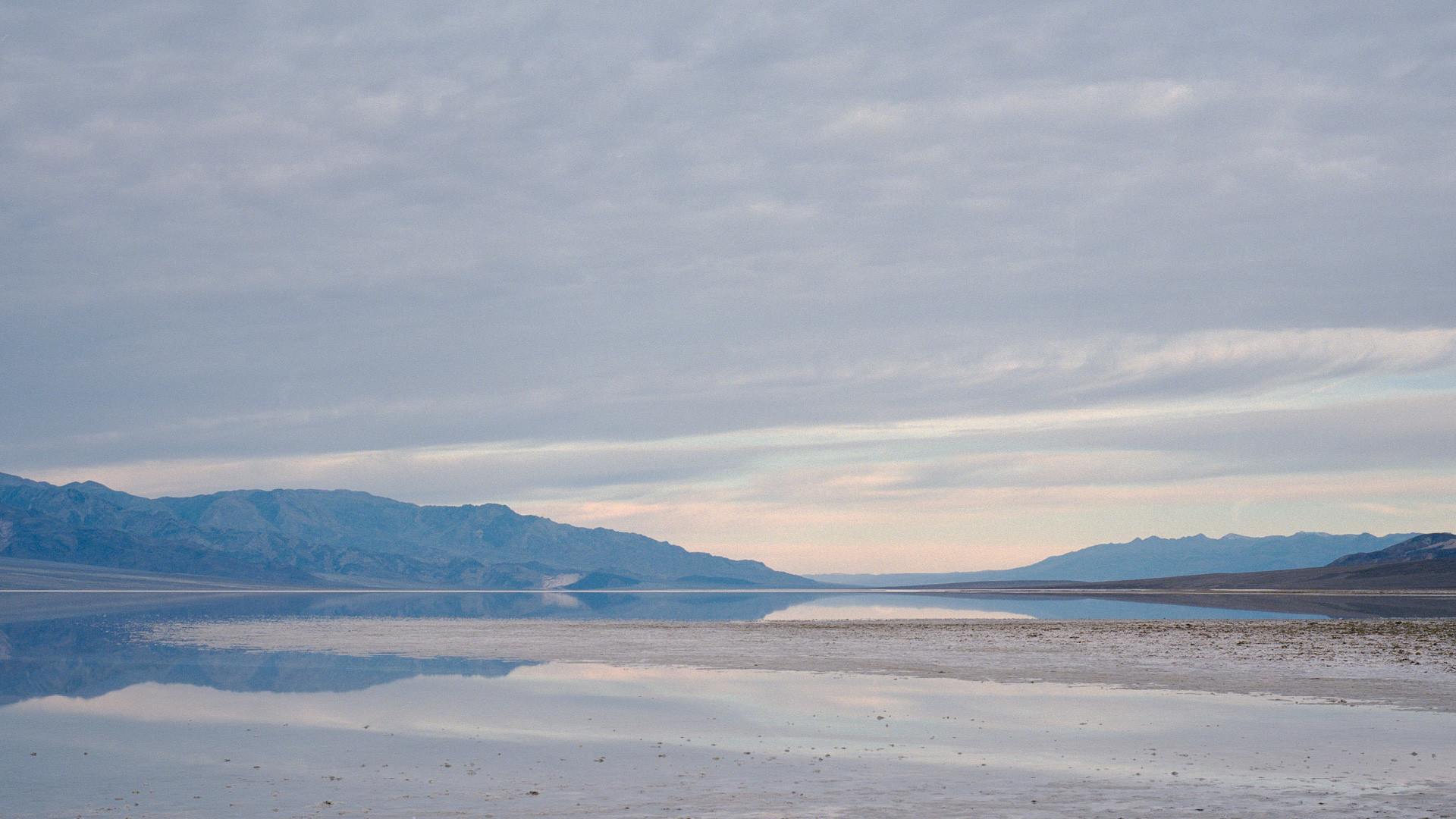
A lake has emerged in the hottest place on the planet. Shallow and wide, bluish grey in an improbable overcast, reflective of the surrounding mountains and almost completely still, in its undeniable clarity it is wholly about — itself.