Can a doctor afford to be an ordinary person at work? «The Pitt» and the Michel Foucault’s panopticon
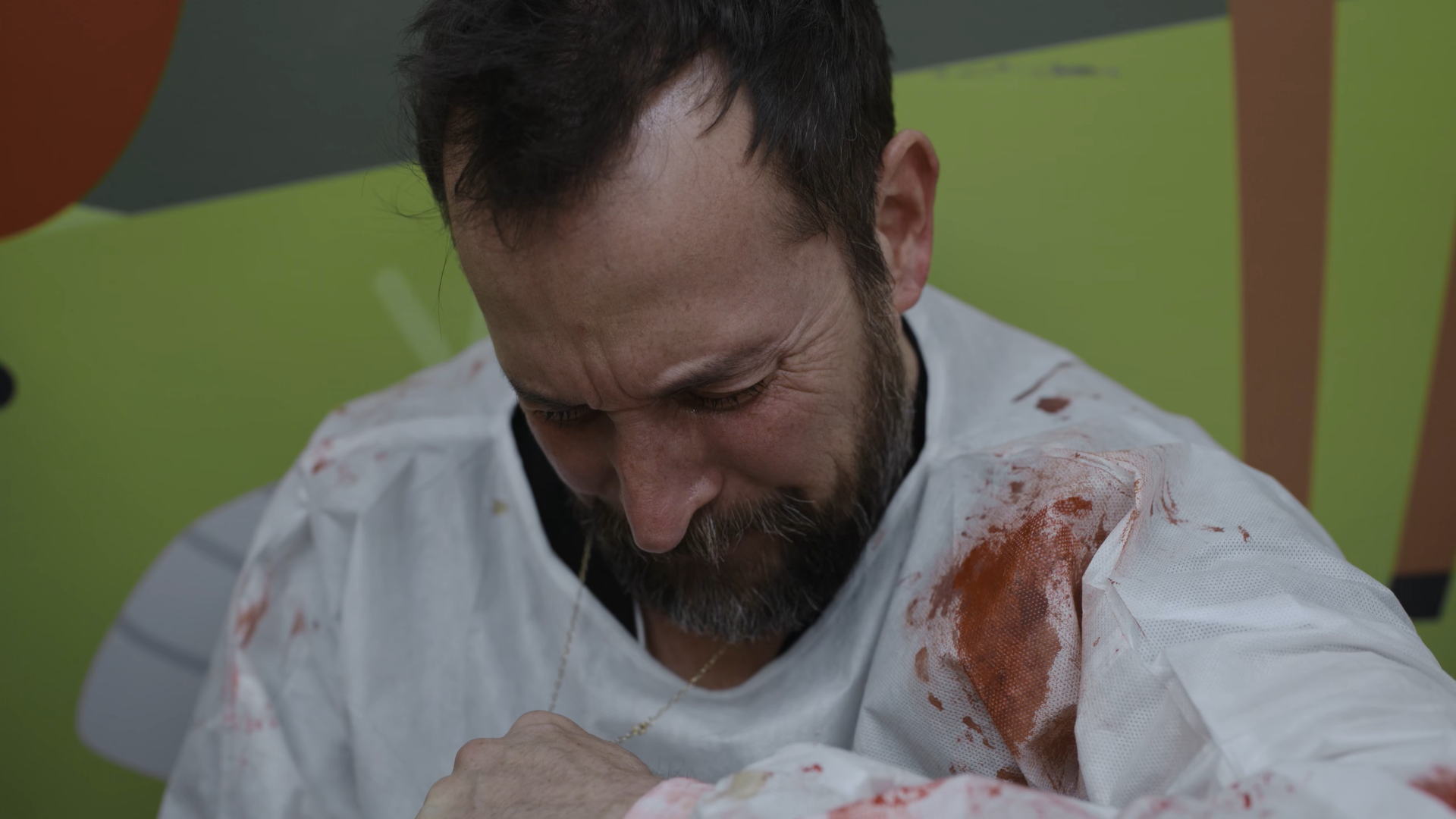
The character of Michael Robinavitch (Noah Wyle), the main character of «The Pitt», in addition to another depressive character the aesthetics of «literally me» for lonely men who have not found care and support in the world (by the way, at the end of the final series of the second season there is a reference to the Robby’s orphanhood), gives a vivid metaphorical image of the Michel Foucault’s panopticon working in both directions. Unlike the original idea, the hospital and its main character not only oversee patients being in a visible minority, but also try to generalize the grief of all those who initiate the experience of sorrow. The position of a solitary warden then presents itself as a vulnerability.
The characters of the series learn to co-experience, co-suffer, while finding a distance at which the ability to build trust with others does not atrophy definitively. But the experience of the characters suggests that this task is on the verge of being impossible. The one who looks out for everyone, Robby is a case in point. He is literally in plain sight, his colleagues have every right to turn to him for help throughout the entire work shift, and they do it regularly, since Michael possesses the highest competence. Thus, Michael, as the head of department, upon receiving this position becomes the person that the position implies. Before us is a constant opposition, setting in motion drama: person who should be a doctor in terms of social stigma: cold-blooded but understanding, trying to be objective, empathetic but holding distance, leaving personal behind the walls of the hospital; someone who is first and foremost human, therefore the one who can err, giving himself the right to err.
It is precisely this topic that shines through more sharply, more brightly at «The Pitt»: during business hours an employee is someone who holds a position, i.e. the position is a kind of Venom, claiming to replace identification with impounding for a certain amount of time. Or else a person remains a human being at work, and only then do we start talking about what qualities he should approve of, cultivate, thereby giving the position itself through his self as a way to grow? Robby informs relatives of the deaths of their loved ones, he is the target of grief and loss, it feels through him, begins with him. He brings bad news. But he also requires the high standard of employees to leave their own mourning outside the hospital. In the second season, there is an episode in which Robby rudely and viciously treats Dr. Mohan (Supriya Ganesh), accusing her of being too focused on conflict with her mother during work, and that it leads to a panic attack.
Robinavitch himself is far from perfect. The dramatic line of his story in season one highlights the guilt he feels for the death of his mentor during the pandemic. As the narrative moves towards the final episodes, Robby becomes increasingly vulnerable to a potential nervous breakdown. The head of the department’s panic attack unfolds in front of Whitaker (Gerran Howell), a fourth-year medical student. This is a lesson for Robby, a lesson about false self-disappointment — a feeling that needs to undergo transformation, because taking full responsibility for the vast number of adults is impossible.
But how do you stand up to the pressure of your own position when your job is literally saving lives? It is about saving another will, another way of thinking; saving a human life is providing immediate possibilities that it will order in the future. The doctor here has a divine function, a function of destiny. But the high concentration of transcendental experience makes it impossible to refactor what is happening: and then the doctor begins to lose his bearings of personal responsibility and guilt. It is not difficult to see how a series of altered concepts leads to the conclusion that if my successes save lives, my failures lose them as well.
Under Robby’s supervising gaze comes Al-Hashimi (Sepideh Moafi), who is asking him for help in a human way of course, not just as a competent specialist. Al-Hashimi here meets a colleague who has clearly defined the priority for himself. And the final dialogue with Langdon (Patrick Ball) at the end of season two follows the same way: former friends were unable to speak openly for the previous fourteen episodes, but here Langdon turns to the inner voice of the main character: «How can we follow the unreachable target you set if you don’t always manage it yourself?». Let you and others make mistakes, Dr. Robby, let them. Michael has to go on a long-awaited vacation (is he really long-awaited?), so that he may not return, but Robby can leave (pass away) only if he is sure that after him the hospital will work with identical efficiency, and if others do not suspect him of the behavior of a weak person, as he defines it for himself. The conclusion is comical and becoming increasingly clear: these conditions are unworkable. If you want something in the future, you have to leave something in the past.
The question is, «Can a doctor afford to be an ordinary person at work?» sets a general, messianic tone that is undoubtedly likely to irritate in Robby’s character. But after this messianism, carelessly and uncorrected, it is convenient to consider the situation of ascension in another perspective: what if the ascendant was too compassionate towards himself; what if the ascendant became confused in hubris, thinking that without him the hospital (world) would end; what if the hospital (world) calls him to stay just because it’s the only place he feels needed?