Fragile as hell
Written by Anna Rotaenko, editing and commentary by Aleksandar Kuzmanov, Stuttgart, Germany, 2026.
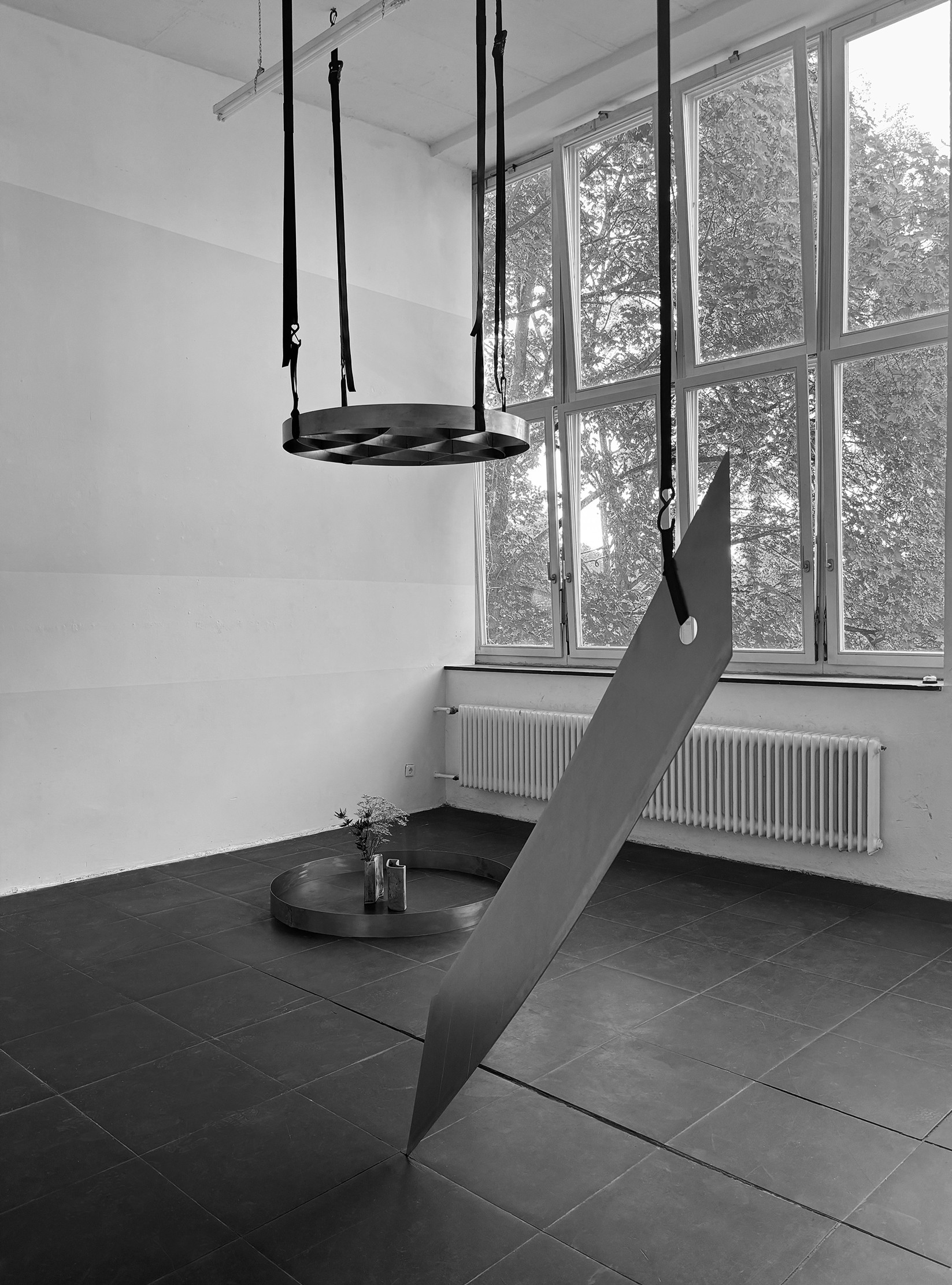
Paper Knife
AR: Solidarity can be dissected as the gift of land and the sharing of food, and in this way, empathy. Today the latter has been financialised and is used as a speculative commodity — the exchange of which is delegated to various institutional and state infrastructures; solidarity serves not only as a means of expressing unity or care but also as a tool of filtration, defining and dividing beneficiaries into those worthy of empathy — and those who are not. The bureaucratisation of these processes leads to the individual becoming merely an operational unit, and consequently the sense of empathy is alienated — aestheticised by political programmes, operating by the systems of control in times of crisis. So, solidarity as a tool of political reaction designed to maintain the status quo, tends to wane. The polycrisis — or the Third World War — is causing inflation in the sense of sharing, replacing the existential negativity of late capitalism (such as depression) with a pragmatic one, and resurrecting a paranoid mode of existence — one characterised by hostility towards the other — which is more suited to a society mobilised around protectionism.
As a rare political feeling nowadays, it might also be something immensely greater than just a perception or a “situational performance aimed at building one’s own social capital rather than a tool for achieving tangible, systematic change”.1 Maybe because of that we are not gonna shut up about it (I do not know who we are anymore). Begging for solidarity, while aware that asking for a gift is an oxymoron.
AK: The individual is instrumentalized for a broader narrative of ‘solidarity’, creating both an internal (within the individual) and external (to the broader public) sense of communal participation while very little is taking place in order to make impactful changes happen. Solidarity becomes a means of self-creation, self-fashioning on a social, national and international level instead.
AR: In 2022, I am half-illegal person, a solidarity-network-residence participant, deeply shocked, sitting on a bench in Karlsruhe, surrounded by overpopulated wasps and a few sunny bunnies from the streaming water, writing: I look at a small sculptural fountain erected on the site where there used to be a castle, the ownership of which had changed over the course of history, until, in 1944, the castle was destroyed by an air strike. Water is pouring from one steel plate into another with the help of an electric motor powered by Russian gas. Imagine a system of pipes, large and small, transporting said gas across the continent, supplying burners, power plants, and households. Giant underground pipes and smaller pipes on the sides of buildings. What is important in such a world? Technology and resource allocation count, while human lives and ideas are much cheaper and equally insignificant — they are used as decorations in the conditions of an aggressive struggle for resources.
Now, in order to apply for the Artists at Risk program, you must prove to be at a certain level of risk,2 but you must also provide evidence of a sustainable career track, an impressive CV and portfolio must include collaboration with institutions in different countries, preferably within the EU, or at least with branches of European institutional networks; a certain focus on political criticism in your projects is welcome if you are under risk of arrest. On the other hand, it is completely irrelevant what you have accomplished, written about, which communities you have been part of, or how well you articulate your thoughts. What matters is who knows you and that they are safe, powerful people with a reputation. The application form included a section for preferred destination, but I didn’t use it; writing “any country” instead to increase my chances of escaping. However, one’s understanding of risk and danger varies depending on a relative perception of safety.
Following the start of Russia’s full-scale invasion of Ukraine in 2022 (the war and occupation had already been going on for years), artists from all parts of Ukraine were able to apply for temporary relocation to European Union countries under this program. In 2025, the non-profit umbrella organization included in its network a residency near Kharkiv,3 less than 50 kilometres from the snaking surface frontline, the physical collision of bodies and the forest strip, filled with fragments resulting from these encounters. This would indicate a hope that authors from the occupied territory could apply to be relocated to a more decent place. It is unlikely that they would be able to get there however: a special regime is in force in the occupied territory. This regime restricts movement, property rights and freedom of speech through institutionalized systems of forced deprivation of previous citizenship, the enforcement of a new one, long-term imprisonments without trial, torture and filtration camps, and governmental organisations for family separation and re-education of minors — future soldiers and earth fertilizer. In case the border crosses over a person’s body, their only chance is a chain of illegal movements across the territories and borders of countries such as the Russian Federation, the Republic of Belarus and others. Proceeding further, asylum procedures in third countries are possible; yet an ever-decreasing number of countries regard such a journey as a compelling reason for not being safe in Russia. In the eventuality of being delayed for more than a few days along this route, including forced detention, the evidence of provable risk also significantly declines. EU countries do not stamp visas in documents issued by the occupying authorities, as this would signify recognition of their legitimacy. The same applies to passport holders with places of birth or residency in Muslim subjects of the Russian Federation, such as Chechnya,4 where physical violence against LGBT people and women, child marriages and torture and much more are practised. It is not unusual for ‘relatives’ to track down victims of violence in neighbouring countries, such as Georgia and Armenia, and finish them off there. The same applies to activists who blow up railway tracks carrying military equipment, artists working within marginalised communities, anarchists supporting Ukraine’s self-defence, and so on. The skyfront is more dangerous still, teeming with missiles and aircraft; then there is the nuclear front, the ecological disaster and the silent war within the diaspora, here, in the Parallelgesellschaft.
AK: The international rules-based order relies on a set of systematized agreements, treaties and regulations. Those actors who have lost or have let go of the assumed concern for shared humanitarianism can appropriate the existing language of the law for their own ends, muddying its semantic content. Already-entangled in the net of institutions and international law, other agents by default already speak the transformed language. Furthermore disentanglement presents a fundamental risk to those for whom abiding by those agreements, treaties and ultimatelythe pursuit of a normative ‘peace’ forms a foundational identity marker as individuals, societies and states.
AR: My application was accepted for consideration by Artist at Risk, and I applied for a visa — a special application for a very short-term visa under the excuse of a ‘business trip’. The embassies were concerned and semi-closed. I had to pay various fees, provide proof of a high salary and return tickets, invitations from the host institution, confirmation of accommodation and political affiliation, approval from the host country’s Ministry of Culture and a couple of city authorities, vaccinations, several flights, the disposal of personal belongings, and the cleaning of all personal data from every device. Fake letters about non-existent projects — prostheses of guerrilla tactics — have become part of the toolkit employed by cultural corporations. What happens to you next depends on which network partner selects you, and what objectives they are pursuing through this collaboration; in other words, it all comes down to chance. Some of my colleagues along this path fell victim to sexual violence, found themselves in forced labour building cottages under the cover of an artistic residency and escaped after a few months, or ended up in a drug den; received a large grant, created an installation in a major European museum, were deported, nominated for an award, organised a festival, committed suicide. A month after I arrived, I was simply asked when I can finally free up the temporarily-provided accommodation and if I would be so nice as to provide proof of a return ticket for auditing purposes. As an operational unit, I had served my purpose; project logic, ingrained in the DNA of the alienated to the stage of financial reporting — where empathy had long since been outsourced to a poster with the word ‘Care’ on it — did not know what to do with me. In order to stay, I hired a lawyer for another solidarity grant which had made its way to me via other people’s bank cards in various countries and eventually ended up on a receipt that I was able to cash in at a DM store. I wrote hundreds of letters every day, secretly used the institution’s printers and scanners on weekends, and lived for several months without being eligible for insurance,5 a phone number,6 a bank account, housing and border crossing. If I’d had to fly out, I wouldn’t have been able to buy a ticket on my own. In a way, the war helped me to survive — grief is blinding; my family has bombs being dropped on them and I want to see them; that’s all I thought about day and night, and it is still so.
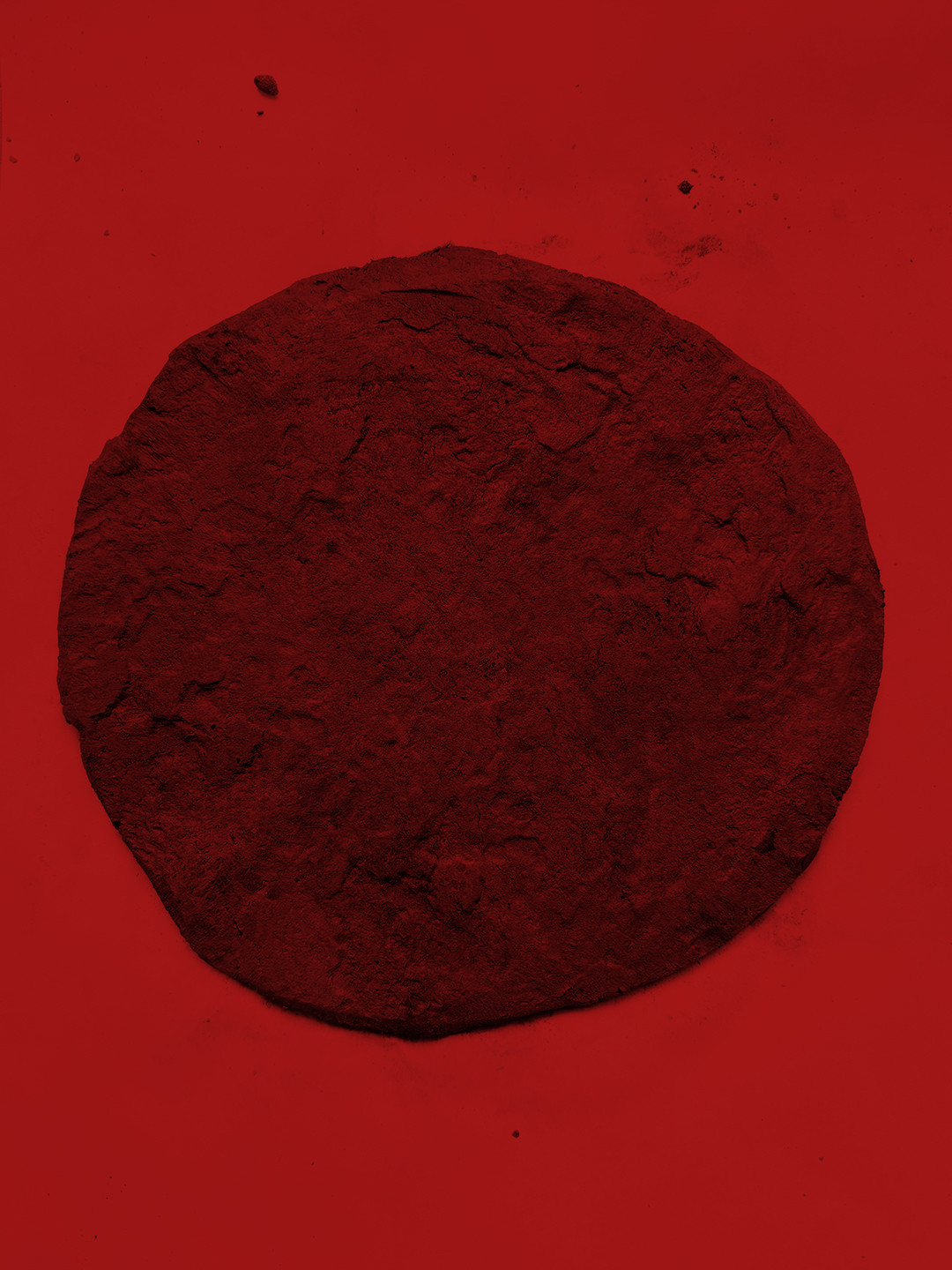
Old injuries and marks immediately resurfaced, as if in some sort of exchange with the captured documents: my only kidney began to ache, one of my last remaining teeth became infected, my fear turned into sweat. I am already bored of describing the adventures of all these organs and compiling a list of the insults they received, since in essence they appeared far more autonomous and independent, divided amongst multiple institutions which I was also not permitted to visit, but I did, and made my pleas on behalf of this whole crowd of subjects, who were far more materialised by their suffering than the artistic and political stance that, in 2022, found itself on the side of the defeated.
The face had turned into a Slavic muzzle, the tongue had gotten dirty and the nerves in one of my hands short-circuited after which we stopped feeling each other for a while. Multiple irrelevant relationships crushed into my already unwelcome and offensive physical presence, the very evidence of that somewhere in this Garden of Eden, there is again a war going on. In the new year of 2023, I opened a bank account with Deutsche Bank, only for it to be closed immediately with simple reasoning: “We thought you were a housewife laundering money”. It seems that few people actually read the paperwork involved in all of these processes — it is definitely not a priority in any case, including for Deutsche Bank employees to whom I have repeatedly provided my contracts and letters from government departments stating that I am a cultural worker and that I should, if anything, be protected, but, given that I have already arrived, it is impossible to protect me from a danger that I have already avoided ‘on my own’. Thus I am not eligible for a humanitarian visa; yet, for now, temporarily, they would not insist on deportation, at least until my circumstances had been further clarified. That’s what it states in a letter from the German Foreign Ministry in my file at the Ausländerbehörde in Karlsruhe, which contains over 80 pages of correspondence between various departments, but consists largely of copies of my birth certificate, marriage certificate and confirmation of my participation in the cultural exchange under the artist-at-risk program. Obviously, this wasn’t enough, because to obtain a permit to temporarily stay, one simply had to provide an employment contract, insurance, a bank account, a language test certificate and proof of residence. To obtain an employment contract or apply to rent a property, you need to provide proof of insurance, a bank account and a temporary residence permit. To open a bank account or obtain insurance, you need to provide all of the above. It’s simple: I was lucky enough to follow the so-called ‘highly skilled workforce’ track, rather than the route for unclear refugees under the humanitarian section of the German immigration system.
AK: To be disembodied is to feel a distinct dissociation from your physical presence. An arm, the proper place of which is the orthopedic clinic, extends from the torso, just below the point from which the eyes, to be examined by the ophthalmologists, can observe them both. An illusion of disownership strips away that which you know and feel. It borders on being a reverse phantom limb — a body part that is there, but does not seem to belong. To become aware of your own value as a living being explicitly through the standards and judgements of others then forces upon the mind a similar experience. It is the on-ramp to a superhighway leading to inner dissolution into smaller and smaller categories. Whether one had a stable notion of identity and self-worth to begin with, is irrelevant — the systemis already working in concert with the street heckler to strip it all away.
AR: Although I pay a fairly high tax rate — funds that seem to be used to mock people like me further — I am not in a refugee camp, I don’t needle myself with morphine, and I don’t increase my already high risk of suicide accompanied by renewed bullying on ethnic and gender grounds, catcalling7, and the loss of all professional contacts over these sick four years. Crossing the line between tourist and war refugee, you hand over your social and symbolic capital to pay the ticket price; the empire of ethics collapses with inevitable inflation, and at the currency exchange booth you end up amounting only to a few cents.
As an artist, freelancer and highly qualified professional — who, according to the German Foreign Ministry, should not be deported immediately — I sent out around 50 inquiries about renting accommodation in various parts of Baden-Württemberg. Given that my immigration case is being handled in Karlsruhe, I am not entitled to register my residence elsewhere. I did not receive any replies, so I created a new profile on Immoscout24 in the name of a man who has a permanent employment contract and sent out a further 320 inquiries, earning 10 viewings, attended all of them, and ultimately received one positive response.
Four years before his tragic death on the border between France and Spain, Walter Benjamin wrote in his essay Der Erzähler:
“experience has fallen in value. And it looks as if it is continuing to fall into bottomlessness. Every glance at a newspaper demonstrates that it has reached a new low, that not only the image of the external world but also the moral image have overnight undergone changes which were never thought possible. With the outbreak of the World War a process began to become apparent which has not halted since then. Was it not noticeable at the end of the war that men returned from the battlefield grown silent — not richer, but poorer in communicable experience? What ten years later was poured out in the flood of war books was anything but experience that goes from mouth to mouth. And there was nothing remarkable about that. For never has experience been contradicted more thoroughly than strategic experience by tactical warfare, economic experience by inflation, bodily experience by mechanical warfare, moral experience by those in power. A generation that had gone to school on a horse-drawn streetcar now stood under the open sky in a countryside in which nothing remained unchanged but the clouds, and beneath those clouds, in a field of force of destructive torrents and explosions, was the tiny, fragile human body.”
I would add that, having survived, they paid with their untold stories for the extension of their temporary residence permits here on earth. Two months later, we were kicked out of that flat under a scheme for urgent sale. Between 2023 and 2025, I spent several thousand euros on acquiring language skills through German language courses, confirming them with certificates and exams. In parallel I experienced the reverse process of losing proof of my art education at three art schools, one technical college in the field of design and work experience — including, among other things, a teaching position in an art school and heading the class of media arts. All turned into a pumpkin. Certificates of non-recognition of education are also cost-based. The fact is, that if an educational institution has its licence revoked, changes its form or ceases to exist altogether, because the state in which it is located classifies contemporary art, feminism or support for LGBT rights as terrorist activities — they also cease to exist within the system of the German State Commission for the Recognition of Education. For the honourable system of academic accreditation, I never graduated from school, college or university, nor have I ever been a teacher. I still collaborated with some holy madmen in European institutions, received awards and grants, and my works are in museum collections. It was also me who was escorted out by security and the police from the museum whose collection includes my works and where my installation on corruption was on display at the time, because I had signed a letter from cultural workers opposing the start of a full-scale war, was blacklisted as an unreliable author, and had sponsored the Armed Forces of Ukraine and individuals involved in the defence of the country.
In October 2025, I resumed my undergraduate studies at the ABK Stuttgart and also submitted a set of documents to the Ausländerbehörde Stuttgart to extend my temporary stay permit. I read on Reddit that, at present, there is a chance of receiving an automated email confirming that your documents have been received and that you may be placed in an electronic queue to submit them for review in person. While this certainly does not guarantee a positive decision, or indeed any decision at all, such a possibility does exist; however, you should not expect to receive this automated email until at least two years after submitting your application online. Furthermore, in the specific case of the Ausländerbehörde Stuttgart, rumours are circulating that the department responsible for processing migration applications for the extension of temporary residence permits is divided among a number of staff members, each of whom is assigned several letters of the alphabet corresponding to the initial letters of the applicants’ surnames. It so happens that after the letter N there is a significant gap in the Ausländerbehörde’s human resources, due to the fact that the temporary staff member who had come to replace a retired employee a couple of years ago — and who was responsible for the letters O, P, Q, R, S and T — also left. There is, of course, also a procedure for appealing against the failure to receive a confirmatory email regarding authorisation to join the queue for an appointment to submit documents in person. In order to follow this procedure in accordance with the Administrative Court Procedures Act, you must wait three months, resubmit your documents, including a written letter by priority mail addressed to the Ausländerbehörde official handling your case, if such a case exists. Does it exist? Who knows?
And you must hire a lawyer to file an application on your behalf for a court hearing, in the case of your absence, as this hearing takes place within the Ausländerbehörde Stuttgart itself and may perhaps speed up or slow down the processing of your application. I paid the law firm a significant amount of money just to keep playing this game with my own life. I researched and wrote letters and pleaded and phoned, and in the end, not without some reluctance, one of the lawyers in Stuttgart issued me with a receipt for reviewing my case, but promised nothing, and, as it turned out later, did nothing — neither read the letters nor got familiarised with the circumstances of the case. All I have to date is an open case file regarding my request for the electronic feedback I am entitled to, but not guaranteed, regarding the allocation of an appointment slot at the Ausländerbehörde, and a sluggish email correspondence from the attorney in question, who forwards me emails from Ausländerbehörde stating that they have not received my set of documents submitted jointly with the attorney in October 2025, in January 2026 and in February 2026. It may be that the list of required documents will not change, but the fact is that each time the most recent versions are required — issued the current month rather than the month before. These include, amongst other things, proof of registration at my place of residence, the property owner’s consent to my presence on their premises, proof of passing a language exam, a payroll receipt and confirmation from my employer that I have not been dismissed and am still on the company’s payroll. The last two I cannot provide, as I am a freelancer and am registered as a small business owner with the Stuttgart tax office under the German Employment Act. I wouldn’t have been able to receive a salary anyway, as I’m unable to use banking services whilst my temporary stay permit is pending, being in a state of limbo, along with Schrödinger’s cat and a bunch of other animals.
AK: An overbearing sense of impossibility then nonetheless causes the imagination to bring into being that which might be possible. The boundary at the limit of one extreme becomes the crucible in which another world can be imagined.
AR: One of Georges Bataille’s key ideas is the experience of limits, where the boundary manifests as death, ecstasy, laughter, sacrifice, madness, or art as destruction of form. These mythopoetic structures exist cyclically — as interlinked states of one energy, so poles do not oppose but generate motion. Bataille removes the religious meaning from sacrifice, transforming it into an inner process — destruction as liberation, a necessary phase of rebirth.
One of the well-known nursery rhymes (Abzählreim) in the Russian language serves as a warning about the dangers of the night, a time beyond the realm of children’s play, and is thus imbued with a transgressive power. This rhyme has its roots in the Second World War, constructing an image of an enemy.
I have translated the modern and original versions into English literally:
Out came the moon from fog,
Pulled a little knife from his pocket.
I will cut and I will beat –
You’re the one the circle chose.
In the mid-1940s:
out of the fog a German came
Pulled a Finnish knife from his pocket.
I will cut and I will beat –
All the same, you’re “it,” complete.
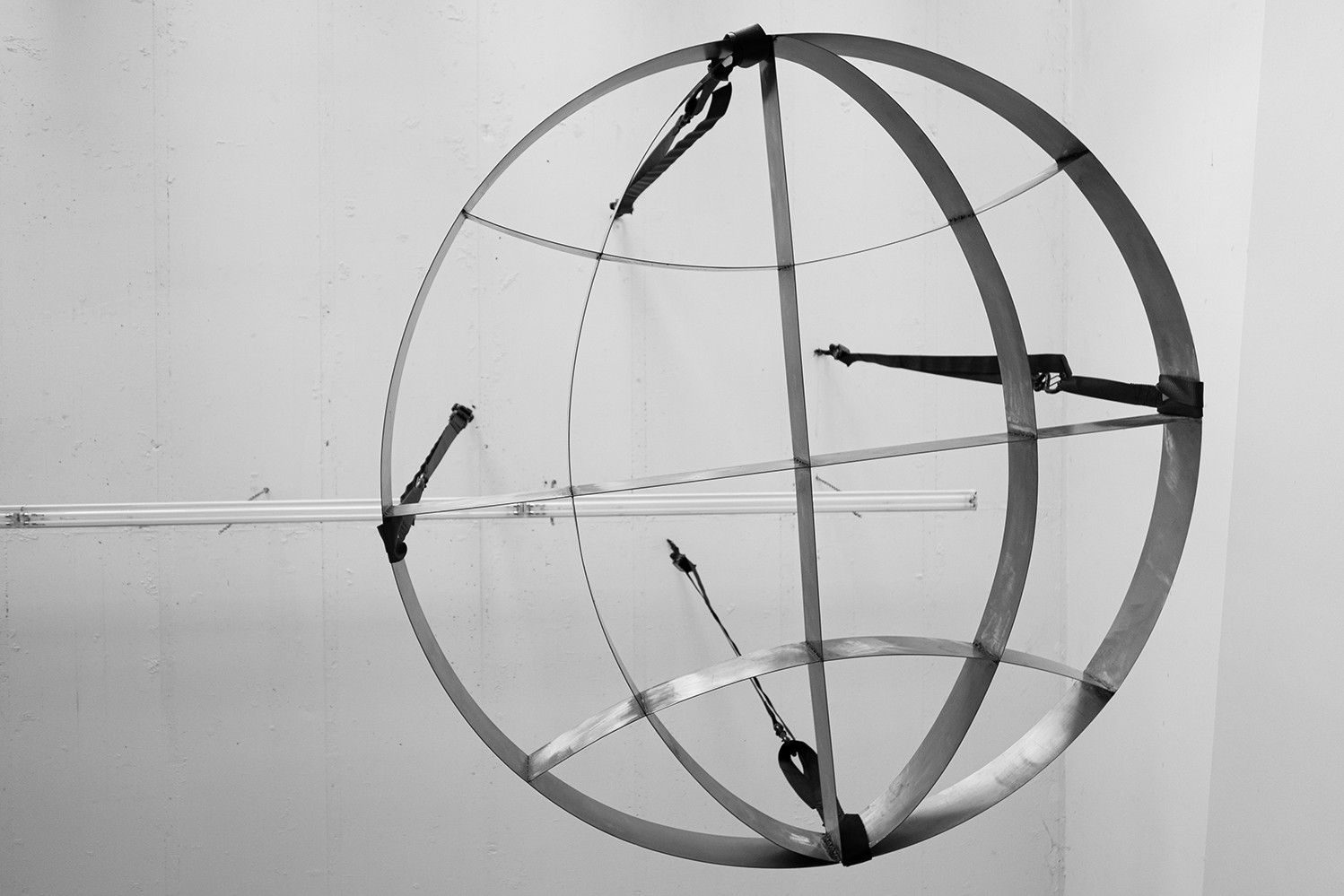
Today, anarchist communities have become the object of commodification by the speculative construct of nation states, just as the art world was long ago. I choose solidarity with the anarchists who operate surveillance drones directly in the combat zone, purchased with money from fundraising, donations to which are most often sent by the last remaining residents of cities and villages wiped out by war, these bitter little bees of caution, manufactured in China, which then, with a 100–500% markup, settling in the EU, are brought to Ukraine, just like military boots. A wide variety of drones are operating in this war: large and deadly, small and fragile, the latest domestic designs and the products of shady corporate deals between the US, Switzerland and China. Meanwhile, anarchists in Ukraine (including Belarusians, Russians, LGBT people, and artists) are crawling through trenches filled with the sludge of earth and blood. Women, meanwhile, are voluntarily going to the front, making up around 40 percent of the Ukrainian army across all its branches — a comparatively higher percentage than in any other army on the planet — and if this were reported in the German press, it would be described as an unprecedented situation.
Anarchist symbols and views are criminalised in Italy. In Germany, anarchism finds expression through governmentalised and subcultured clubs based on shared interests, like any other Verein, which hold rallies against the supply of arms to Ukraine — a sacrifice on the altar of peace. Anarchists die on the battlefield but continue to write letters here, outwards, in order to remain in dialogue.
AK: The individual is first separated out, a border placed between them and the rest, then they are hollowed out and something else is imposed on them as fulfillment, something that maintains the separation and finalizes the loss of unity. The solitary atomized human being continues to exist, fed on false fulfillment, never again needing anyone else.
AR: In her novel The Dispossessed, Ursula K. Le Guin creates a world located in another solar system, where anarchists have been exiled to the moon, and, having endured several generations of hard labour on a resource-extraction plantation, society has become focused on survival at any cost. A completely anti-authoritarian branch of human development — devoid of the apparatus of power, divisions, currencies, nationalities, and yet fully rationalised and therefore obedient — turns out to be realistic. A hope for dialogue leads the protagonist to embark on a journey back to the planet where everything has an owner. Travelling from a collective mirage towards a race of slaves, he finds himself a product of exchange between worlds.
Socialistic vases
Once I read somewhere an old quote that artists could be divided into two categories: portrait- and landscape-oriented (body and surrounding, eye and horizon, skin and stone, content and context); so today most of what I see through the lens of my instagram algorithm are ruins and corpses. Sometimes contemporary sculptures and installations, uncannily reminiscent of those remains, float before my eyes — their material focus and industrialised nature blending with the aftermath of military hostilities. Of course, this is due to a violence-seeking gaze and the way it is processed: the current trend in the discourse on psychiatric self-identification is shifting towards CPTSD (complex post-traumatic stress disorder); personally, I cannot yet claim to have made the transition to a fundamentalisation of the past within this framework, living somehow without the ‘post-’ prefix.
In the early Soviet period, attempts were made to reinterpret death, to de-semantise it (strip it of its mystical meaning) and replace it with the idea of immortality in the socialist construction of the memory of futuregenerations. However, the Soviet Union, with its mass killings, repression and dehumanisation, with its late-stage cynicism, pushed artists of the 1970s and 1980s into the realm of utopia. It is impossible to call these monumental propaganda installations ‘contemporary’, and yet they tell us about socialism — an exquisite corpse of a belief which their creators were only able to embody within the realm of art. Mosaics and sculptures, giants and flowers, the diktat of man as the highest point of ethics and their killed and repressed authors.
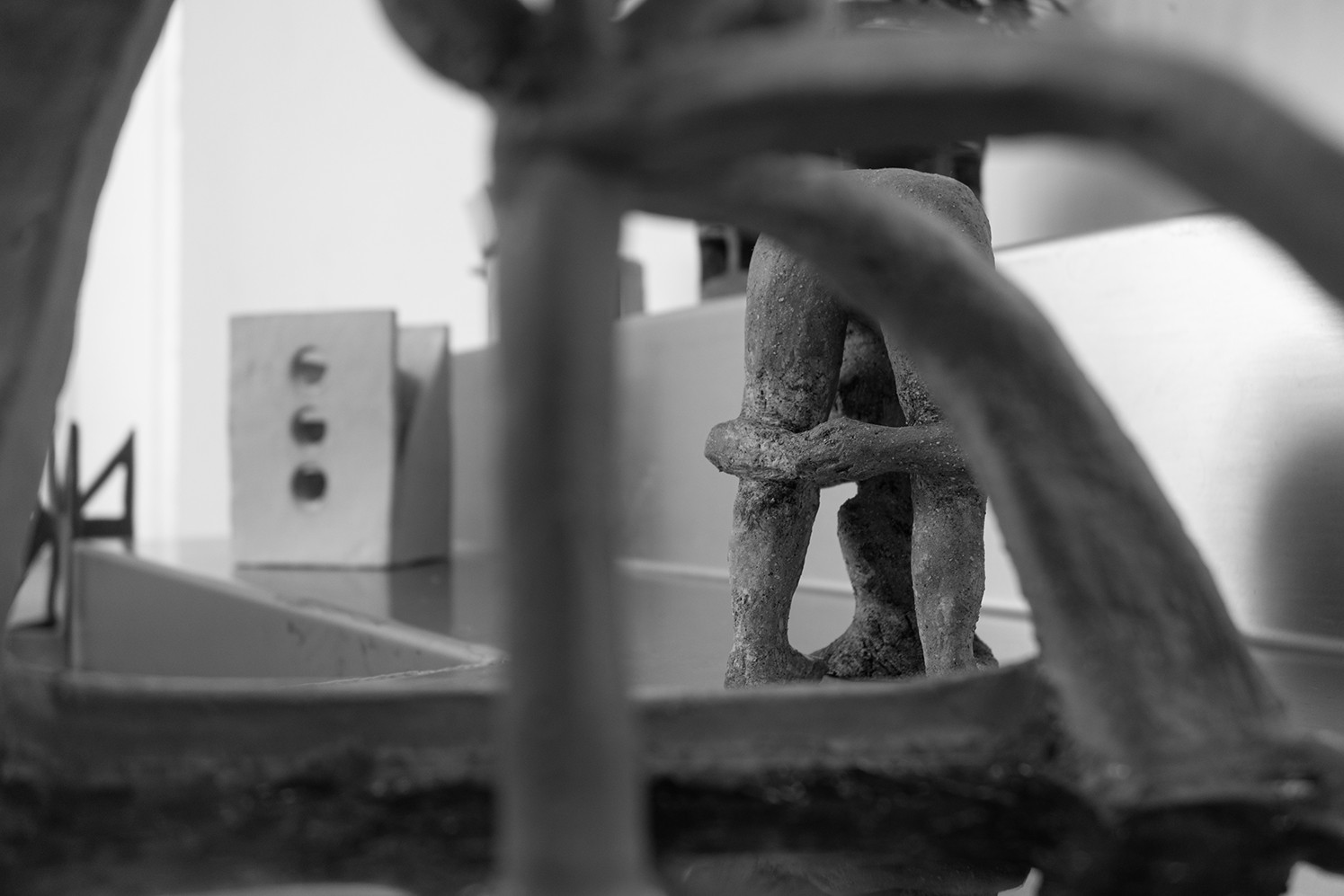
It seems that Soviet-modernist architecture is being erased today, with destruction by war and manipulated history acting effectively as a mathematical progression, both physically and ideologically. Firstly, I was attracted by constructions that visually belong to Soviet modernism but have no authorship (sculptural forms) or a purpose (unfinished, abandoned, demolished buildings) — fragile memorials. Now there is often no physical or even digital access to these kinds of buildings — many of them are under occupation — some areas even disappear from Google Maps. Turning towards my childhood memories, I discovered there a collection of toy houses on a map. Through homages, reduced in size, they became homeless prototypes of what might have become fountains in one of the lines of an impossible future, so I used the glass of crushed bottles to evoke the surface of water.
A joke and the loss of a joke. A building becomes a vase. A piece of fruit becomes a weapon. Ashtrays are for ashes. Nature dies in a natur-morte and the loss of a home, if one is lucky, leads to a mortgage. That’s why it seems I am working mostly with ruins today — real-time-ruins; while thinking about real-time killing. When I mould my ruins from clay by hand, the towers and churches become domesticated. The craft process transforms them into bourgeois nonsense, replacing the majestic and sacred with the handmade. They become part of a still life, the fruit of which is a result, just like me. A self-portrait as the first embodiment of a weapon.
A Bad Seed
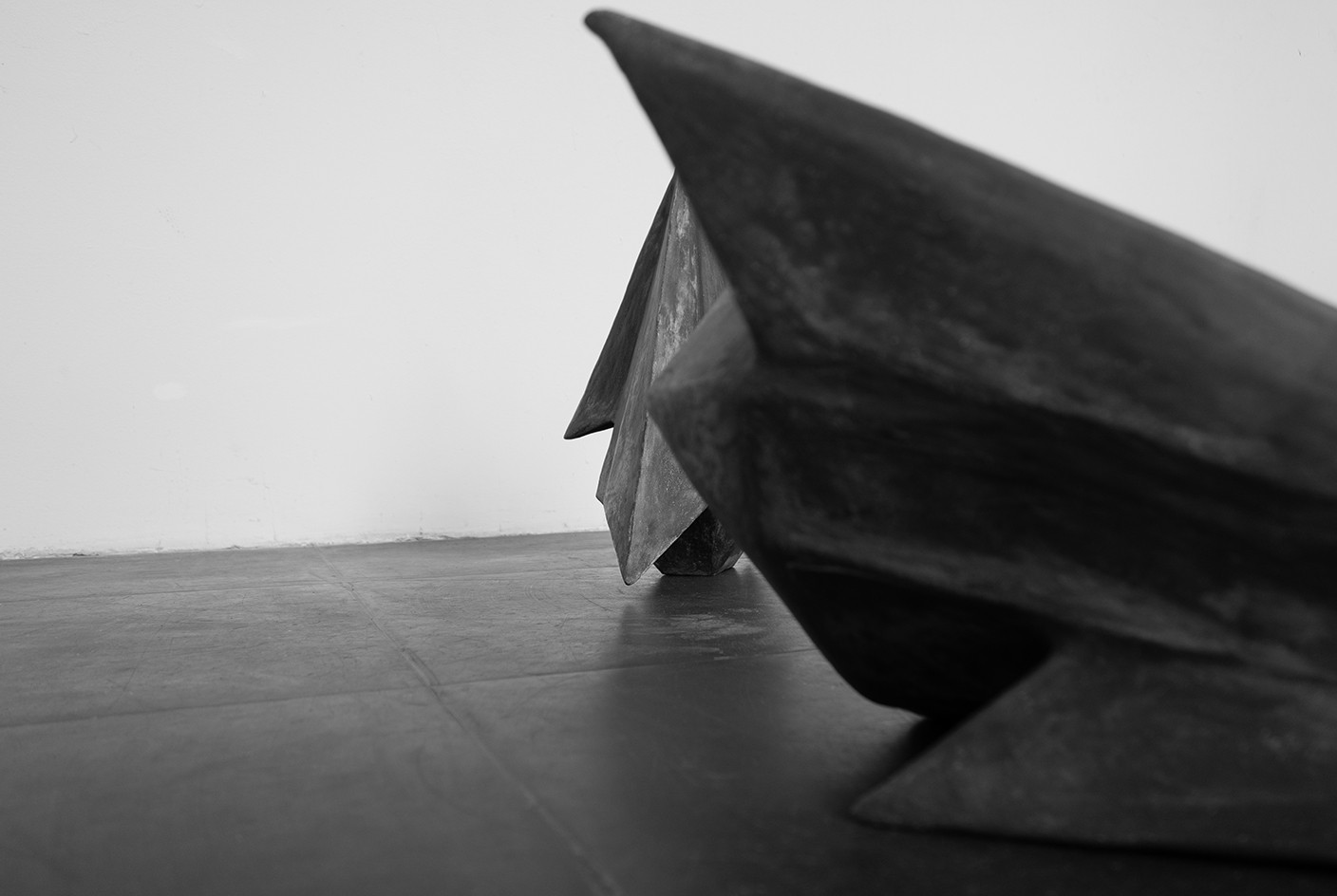
A seed of the herb Trapa Natans8 migrating through rivers, listed in many countries as a rare species, to be preserved and protected, but simultaneously classified as an invasive weed: spontaneous overpopulation brings a river devil9 into a position of ambivalence. My sister and I used to collect its anchors in the silver sands of the Dnipro — now other women’s hands are neutralising mines on these coasts. A repetition of architectural methodology mutates its perception, then a herbarium wrapped in the ground molds a coat of arms. “Herb” is the Slavic word for a subject of heraldry, deriving from the German “Erbe”, signifying an emblem representing a state, family, or person.
Shahed10 is a type of military super-large-class drone developed in Iran, hundreds of thousands of which were sold to Russia, so it gained in warfare against Ukraine: Shahed bodies filled with 90 kg of explosive payload crash into residential buildings, killing their inhabitants. After absorbing the technology in 2024-25, Russia built factories for its own production, albeit not independent, but by recruiting workers from global humanitarian crisis areas, including thousands of girls and women from Uganda11.
The Russian name for the drone also draws on the world of flora — “Geran”12, which symbolises bourgeois domestic comfort, a concept denigrated in Soviet ideological vocabulary, yet in today’s neo-imperialist landscape is more a flower of boredom and mediocrity. Thus, murder becomes a mundane and trivial affair, whilst the ambition of power reaches for eternity: both in space and in time.
The scale of attacks increased from dozens per month in 2022 to an average of 500 per day in 2025-2026. Iran meanwhile faced currency collapse that triggered another wave of protests — and a “shot-down revolution” began on New Year’s Eve, 2026.
Executed in a proportional relation to the infamous mass-killing weapon, a heart-shaped seed implements a dependence between war and migration as a contradiction in the name of the ‘human’13.
1. Imperfect Solidarities. Aruna D’Souza in conversation with Asia Tsisar, AWC Journal #2: Mycelium Against Empires. Infrastructures of Dependency and Solidarity, 2025
2. persecution by the authorities, imprisonment, an immediate danger to your life
3. the city most heavily targeted by missiles — with a population of 2 million living in a state of ruin — yet continuing ambitious art projects such as “Sense of Safety”, an international exhibition at the Yermilov Centre in Kharkiv in 2024, as well as more than twenty cross-institutional events across twelve countries united as “Bridges of Solidarity”
4. the Chechen Republic of Ichkeria, another vanished state
5. which is actually against the law — you’re obliged to have insurance, but if you’re not entitled to it, it’s your own mistake for existing
6. touristic SIM cards from kiosks, registered in the names of others
7. that’s when you walk past the railway station area, hiding under a hood and hear “Ukraine, Ukraine, girl, girl, come here”
8. from Lat., other vernacular names include buffalo nut, bat nut, devil pod, ling nut, mustache nut, singhara nut, water nut, and water chestnut
9. transl. from Ukrainian
10. from Pers. & Arab. meaning “witness”
11. read more on the “Yelabuga drone factory” page on Wikipedia, for example
12. from Lat. geranium
13. In From Speculation to Infrastructure: Material and Method in the Politics of Contemporary Art, Marina Vishmidt writes, “As English-language predicates such as “humane” and concepts such as humanity and humanism demonstrate, the human marks the point of inextricability of domination and care which an infrastructure can be said to materialize. Can we jettison this figure of normativity while holding on to a notion of ethics, such as the “poethics” of existence without the “separability” that makes domination acceptable?”